Ultimate Guide to Automated Content Creation

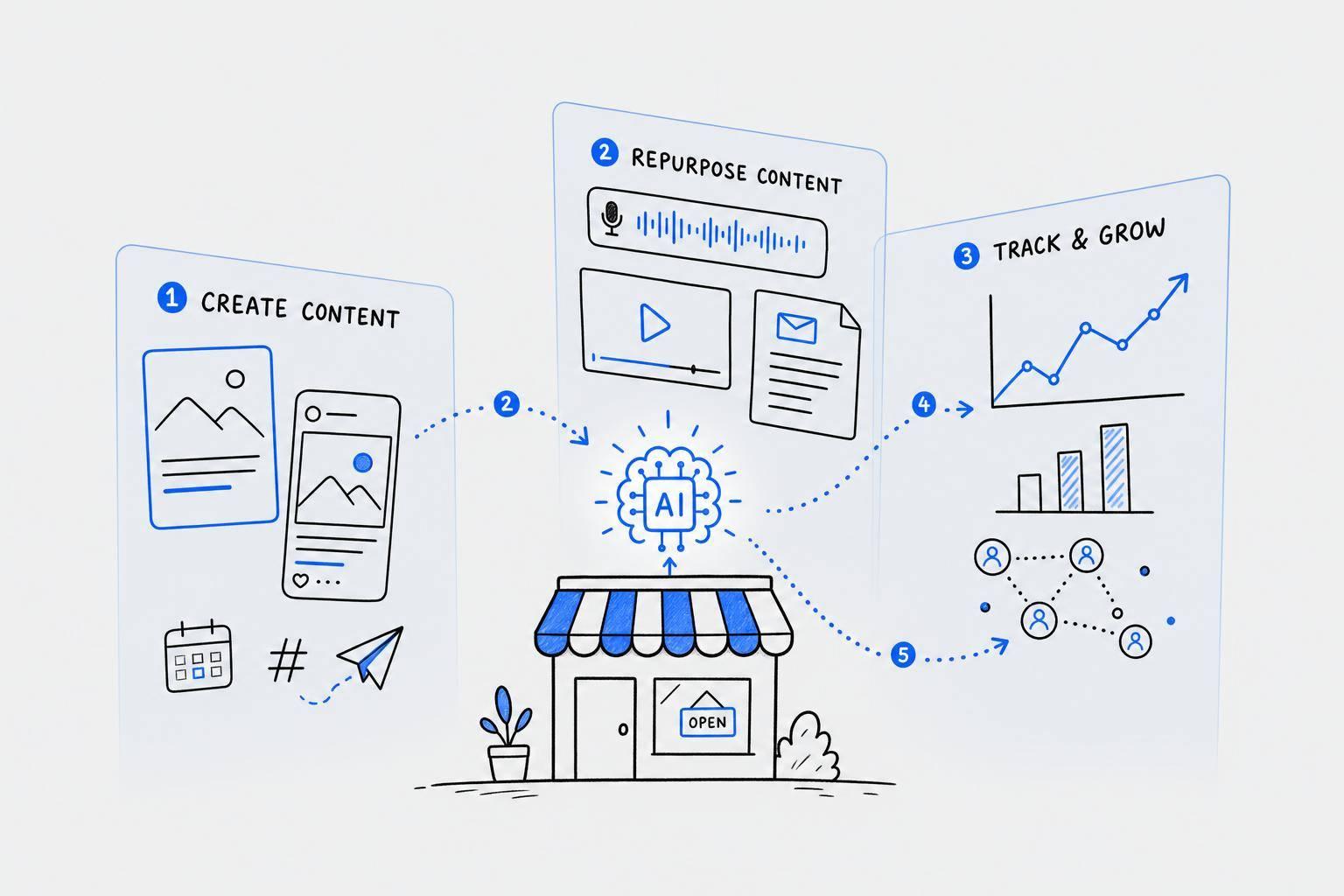
Automated content creation is transforming how businesses manage their online presence. With tools like Draft AI, you can quickly generate posts, captions, and visuals tailored to different platforms, all while maintaining your brand's tone. This approach saves time, reduces costs, and ensures you can keep up with the fast-paced demands of social media. Here's what you need to know:
- What is it? Smart tools create text, visuals, and posts with minimal human input.
- Why use it? It simplifies posting, adapts to platform-specific needs, and helps you stay consistent without burning out.
- Key benefits: Saves time, reduces costs, ensures a unified brand voice, and scales with your business growth.
- Features to look for: Caption generation, visual editing, multi-language support, and scheduling tools.
Start small by defining your brand voice, crafting clear prompts, and batching content creation. Combine automation with human oversight to ensure quality and relevance. Tools like Draft AI can help you streamline your workflow without sacrificing your unique style.
How to Automate Social Media Content With AI (Save Hours)
Main Features of AI Content Tools
AI tools help you make posts fast. They make things easy for your work online. You do not need to be good at words or pictures. They help you look and sound smart. These tools do much more than just quick work - they help your posts stand out. Let’s look at key things these tools do so well.
Making Words and Captions
Finding the right words for your post can be hard. But with these tools, it gets easy. You start with a few points about your business or what you want to say. Then the tool writes captions for you. The style of words matches what you want.
Take Draft AI as one strong example. It lets you send your thoughts by voice. You just say what you think or what you want to share. The tool then turns your words into smart posts for social media. No matter what you say or share - news, a launch, or a win - the AI will find the best style for each site, like formal for LinkedIn or fun for Instagram. Draft AI learns how you write so your posts feel real and true to you. Good words set up nice pictures too.
Making and Changing Visuals
Making good pictures is easier now. You get to pick from many kinds of ready-made styles. You can change size, color, font, and layout to match your look. Want to add a photo? You can, and the tool helps fit your picture into the right size for each site. Smart tools pick good layouts and let you save time.
If your business speaks to many places in the world, these tools can change your words into other languages. This way, your post sounds the same everywhere and more people can read it.
Planning and Posting
Keeping up with all your posts is tough, but these tools help clear the mess. You can plan ahead and send posts to different sites with one step. Draft AI is extra smooth here. It lets you send finished posts straight to LinkedIn. This helps save time and keeps your posts fast and good. You reach your fans with less work, and your plan for posts stays strong.
Strategies for Effective AI-Powered Content Creation
Using AI tools for content creation can save time and effort, but to truly make the most of them, you need a clear plan. By focusing on specific strategies, you can create better content faster while staying true to your unique style.
Defining Your Brand Voice for AI Tools
Your brand voice is essentially your personality in written form - how you "sound" to your audience. For AI tools to create content that feels authentic to you, they need a clear understanding of this voice.
Start by outlining how you want to come across. Is your tone friendly or professional? Do you prefer short, punchy sentences or more detailed explanations? Write down key words and phrases you frequently use, as well as ones you avoid. While AI tools like Draft AI can learn your style over time, providing these details upfront speeds up the process.
Consider your audience, too. Speaking to business professionals will require a different tone than addressing college students. Choose three to five words that define your brand voice (e.g., "approachable", "informative", "witty") and use them as a guide when setting up your AI tools.
It’s also helpful to document specific phrases or expressions that represent your tone. Share these with your AI tool to ensure the content feels consistent and genuinely "you."
Creating Strong Prompts for Accurate Results
Once your brand voice is established, the next step is to focus on crafting precise prompts. A well-written prompt acts as a set of instructions, guiding the AI to produce content that aligns with your goals.
Be specific. Instead of asking for a generic "post about marketing", try something like, "Write a LinkedIn post offering email marketing tips for small business owners who are just starting out." The more detailed your instructions, the better the results.
Include details about your audience, platform, and purpose. For example: "Write an Instagram caption aimed at busy moms looking for quick dinner ideas. Make it lighthearted and include a question to encourage comments." This gives the AI enough context to create relevant and engaging content.
If you have examples of content you like, share them with the AI. For instance, you can say, "Write something like this, but focused on my topic." Examples help the AI understand the tone and style you're aiming for.
Also, specify the desired length. Different platforms require different formats - LinkedIn posts can be longer, while Twitter content needs to be concise. A clear word count or character limit helps the AI tailor the content appropriately.
Batching Content Production for Efficiency
Batching content is a smart way to stay organized and save time. Instead of creating posts daily, dedicate a specific day each week to produce all your content at once. This approach works especially well when paired with AI tools.
Start by brainstorming 10-15 topics you want to cover. Use your AI tool to generate posts for each topic, creating multiple versions tailored to different platforms. For example, a detailed LinkedIn post can be repurposed into a shorter Instagram caption or a quick tweet.
Templates can make batching even faster. If you regularly post tips, create a template for those. If you share behind-the-scenes content, make a separate template for that. Templates keep your content consistent and speed up the production process.
AI tools also simplify scheduling. Many tools allow you to plan and post across multiple platforms without manually copying and pasting. This keeps your workflow smooth and saves valuable time.
To stay organized, assign themes to specific days of the week. For instance, you might post motivational content on Mondays, tips on Wednesdays, and fun facts on Fridays. This not only streamlines your content creation but also gives your audience a predictable and engaging experience.
Lastly, save your best prompts. If a prompt has worked well in the past, it’s likely to work again with a different topic. Keep a list of your favorites and reuse them during your content batching sessions. This ensures consistency and efficiency in your workflow.
sbb-itb-9f5fe42
Overcoming Challenges and Ensuring Quality
Automated content creation has its perks, but it’s not without hurdles. To ensure your content resonates with your audience and maintains its quality, it’s essential to understand these challenges and put safeguards in place.
Balancing Automation with Human Oversight
While automation speeds up content production, human oversight is irreplaceable. The best content creators know that AI is an assistant, not a substitute for human judgment. Every AI-generated post needs a thorough review to ensure it aligns with your brand’s voice and values.
Start by reviewing each post for factual accuracy, awkward phrasing, or anything that might be misinterpreted. Even advanced AI can produce content that’s technically correct but misses the mark contextually. Pay extra attention to sensitive topics or current events, as AI tools may lack the nuance or the latest information needed to handle these appropriately. In such cases, it’s often better to rewrite the content or avoid automation altogether.
A structured review process can help. Create a checklist to evaluate whether the content matches your brand’s tone, fits the platform, and avoids errors. Does it offer something meaningful to your audience? This step-by-step approach ensures nothing important gets overlooked.
For business accounts or high-stakes content, consider having a second person review the material. A fresh perspective can catch errors or issues you might miss, preventing costly mistakes from going live.
Avoiding Over-Reliance on Automation
Automation is on the rise - 60% of marketers planned to increase their automation budgets in 2023. However, relying too heavily on automated tools can lead to "automation bias", where people trust automated outputs even when they conflict with human judgment.
This reliance risks losing the human connection that makes content engaging. When 90% of B2B software buyers say they’re more receptive to companies that produce thoughtful, high-quality content, generic automated posts won’t cut it. Audiences can sense when content lacks the personal touch that comes from human insight.
Use automation for repetitive tasks like generating drafts, suggesting topics, or scheduling posts. But save strategic decisions, unique perspectives, and audience interactions for humans. These areas require creativity and adaptability - qualities that AI can’t replicate.
Be especially cautious with automation in customer service or crisis communication. These scenarios demand empathy, quick thinking, and nuanced responses - skills that are uniquely human.
If you find yourself publishing AI-generated content without reviewing it or if your posts start feeling generic, it’s a sign to step back. Reintroduce more human involvement to keep your content authentic and engaging.
Ensuring Platform-Specific Optimization
Each social media platform comes with its own quirks, audience preferences, and technical rules. What works on LinkedIn won’t necessarily work on TikTok, and AI tools don’t always account for these differences.
For example, LinkedIn posts can be detailed and professional, while Twitter requires concise, snappy updates. Instagram thrives on visuals and short captions, whereas TikTok demands trend-driven, entertaining content. Even technical details like character limits, image sizes, and hashtag usage vary widely.
Tone and style are just as important as technical specs. LinkedIn’s audience expects polished, professional language, while Instagram and TikTok lean toward casual, conversational vibes. Use platform-specific prompts to guide your AI, ensuring it tailors content to each platform’s audience.
Research shows that 66% of buyers value unique formatting, which underscores the importance of creating content that feels native to each platform. Use AI to generate variations of your content that align with these expectations, all while staying true to your overall message.
Timing and trends also matter. A topic trending on Twitter today might not resonate on Facebook next week. Use your judgment to adapt AI-generated content to current conversations and platform-specific trends.
To streamline this process, consider setting up platform-specific templates in your AI tools. These templates can include guidelines for tone, length, and formatting, making it easier to produce content that fits each platform. Fine-tune these templates based on what performs best with your audience.
Finally, remember that social media algorithms and best practices evolve constantly. Stay updated on changes to platform requirements and adjust your strategy as needed. Combining AI’s speed with human adaptability ensures your content stays relevant and engaging across all platforms.
Conclusion and Key Takeaways
Automation is reshaping content creation workflows by saving time, improving quality, and helping teams avoid burnout.
Why Automation Matters
The benefits of automating content go far beyond just saving time. It ensures consistent posting across platforms, which strengthens your brand voice and keeps your audience engaged.
Scalability is a game-changer. With automation, you're no longer limited by the hours in a day. You can maintain a strong presence on multiple platforms without overloading your team. It allows you to experiment with different content formats, test posting schedules, and even branch out to new platforms - all while keeping your workload manageable.
Automation also supports growth without the high costs tied to traditional content production methods.
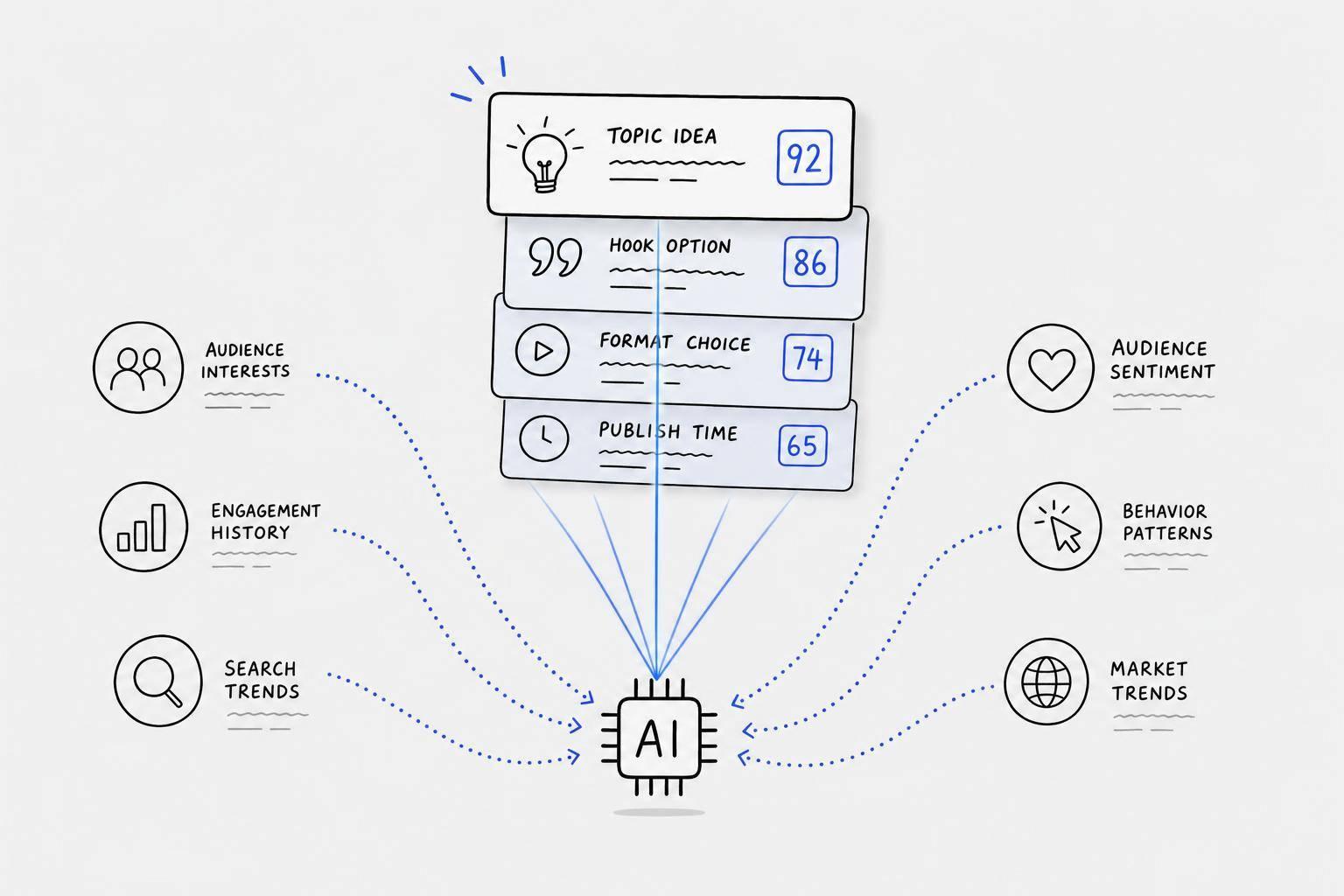
Data-driven insights become more accessible when you're producing content at a steady pace. With the repetitive tasks handled by automation, you can focus on analyzing performance, refining your strategy, and dedicating time to the creative work that truly needs a human touch.
By freeing up time for strategic thinking, automation helps you avoid rushing to meet deadlines or compromising on quality just to stay consistent.
Getting Started with Automation
To make the most of these benefits, start small and build your automation strategy gradually. Focus on one platform and one type of content to begin with. Choose the social media channel where you're most active and comfortable, then expand as you get more familiar with automation tools.
Draft AI is a great starting point. Its user-friendly interface and robust features make it easy to generate content that aligns with your brand voice. Whether you're creating social media posts, carousels, or even translating content into multiple languages, Draft AI handles it all while allowing you to customize elements like fonts, colors, and images.
Take the time to define your brand voice and craft specific prompts for your AI. This initial effort ensures that the content generated aligns closely with your identity and messaging.
Set up a review process before publishing. Develop a checklist to verify brand alignment, factual accuracy, and platform-specific requirements. This step ensures quality control and keeps your content consistent.
Batch your content creation to save time and maintain focus. By scheduling posts in advance, you reduce the mental strain of constantly switching between creative and analytical tasks.
Use automation as a tool to enhance your strategic efforts. The time saved can be invested in engaging with your audience, analyzing performance metrics, and fine-tuning your overall content approach. The goal isn't just to work faster - it's to work smarter.
Finally, track key metrics from the start. This data will help you refine your strategy and improve your workflows as you expand your use of automation tools.
FAQs
How can I make sure AI-generated content reflects my brand's voice and style?
To make sure AI-generated content truly reflects your brand's voice and style, start by tailoring the prompts you provide. Be specific about your brand's tone, preferred language, and core messaging in the instructions given to the AI.
After generating content, take the time to review and tweak it so it aligns with your brand identity. Updating templates and guidelines regularly as your needs evolve will also help keep your content consistent and aligned with your brand's personality.
How can I use AI tools in my content creation process without compromising quality?
To bring AI tools into your content creation process smoothly, start by setting up clear content templates and style guides. These will help ensure your content stays consistent and aligned with your brand's identity. Use a content calendar and well-structured workflows to keep everything organized and running efficiently. Always take the time to review AI-generated content to confirm it matches your brand's tone and quality expectations. Lastly, monitor performance metrics to see what resonates most with your audience and fine-tune your strategy as needed.
How can I ensure automated content stays accurate and relevant while maintaining a human touch?
To keep automated content accurate and aligned with your goals, it's crucial to blend automation with careful human input. Use AI tools to tackle repetitive tasks, like drafting initial content or scheduling posts, but always take the time to review and refine the final product. This ensures it reflects your brand's tone and objectives.
Make sure every part of the content creation process has a clear owner, and establish guidelines on when and how automation should come into play. This approach helps maintain consistency and avoids becoming overly dependent on AI. While automation can save time, it's human insight that ensures your content connects meaningfully with your audience.