How AI Automates Brand Storytelling
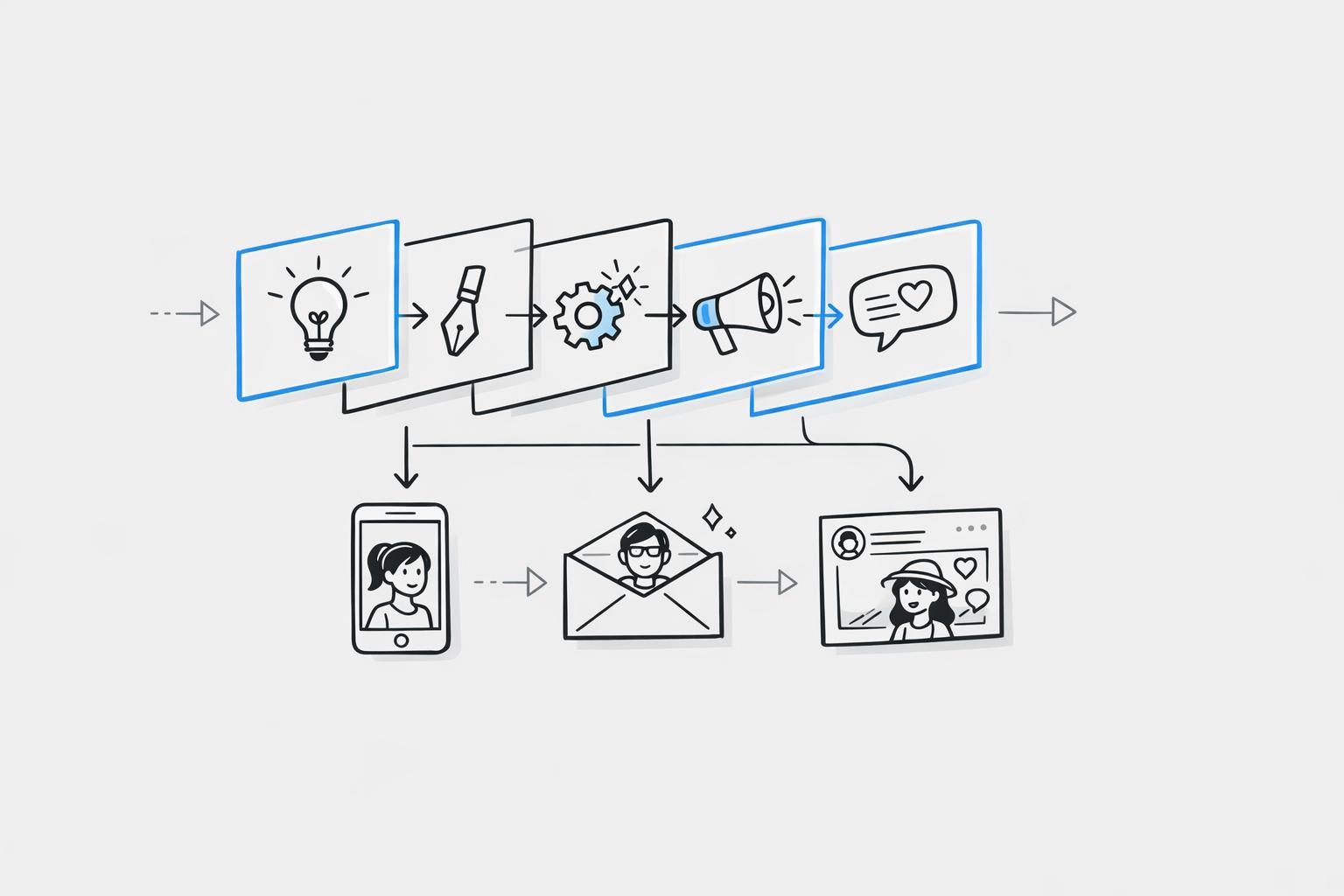
AI tools are transforming how small businesses create and share content, saving time and delivering personalized messaging at an affordable cost. By automating tasks like research, drafting, and scheduling, AI reduces the workload by up to 70%, allowing businesses to focus on their unique voice. With tools like Draft AI starting at $15/month, small businesses can produce professional-quality content without the hefty price tag of agencies.
Key Takeaways:
- Time Savings: AI handles 80% of content creation tasks, freeing up hours for strategy.
- Personalized Messaging: AI uses customer data to tailor stories for specific audience segments.
- Affordable Tools: AI platforms cost $0–$50/month versus $3,000–$5,000 for agencies.
- Better Reach: AI optimizes delivery timing, improving engagement by 2–3×.
AI isn’t replacing creativity - it’s a tool to enhance efficiency and consistency. Start small, define your brand’s tone, and let AI handle the repetitive work.
Master your brand storytelling in 2026: Proven frameworks, real examples, and the role of AI
sbb-itb-9f5fe42
How AI Changes Brand Storytelling
AI is revolutionizing how small businesses craft and share their stories, moving away from one-size-fits-all messaging to dynamic, personalized narratives that respond to specific audience segments in real time. As Ava Mercer, Senior Editor at Campaigner, puts it, "Narrative moves from fixed scripts to modular scenes that can be assembled dynamically around audience context". This adaptability allows your brand story to evolve alongside a customer's journey - whether they're just discovering your business or ready to buy. Three key capabilities drive this shift: personalized messaging, automated content creation, and intelligent delivery systems. Together, these tools redefine how brands connect with their audiences.
AI-Powered Personalization Explained
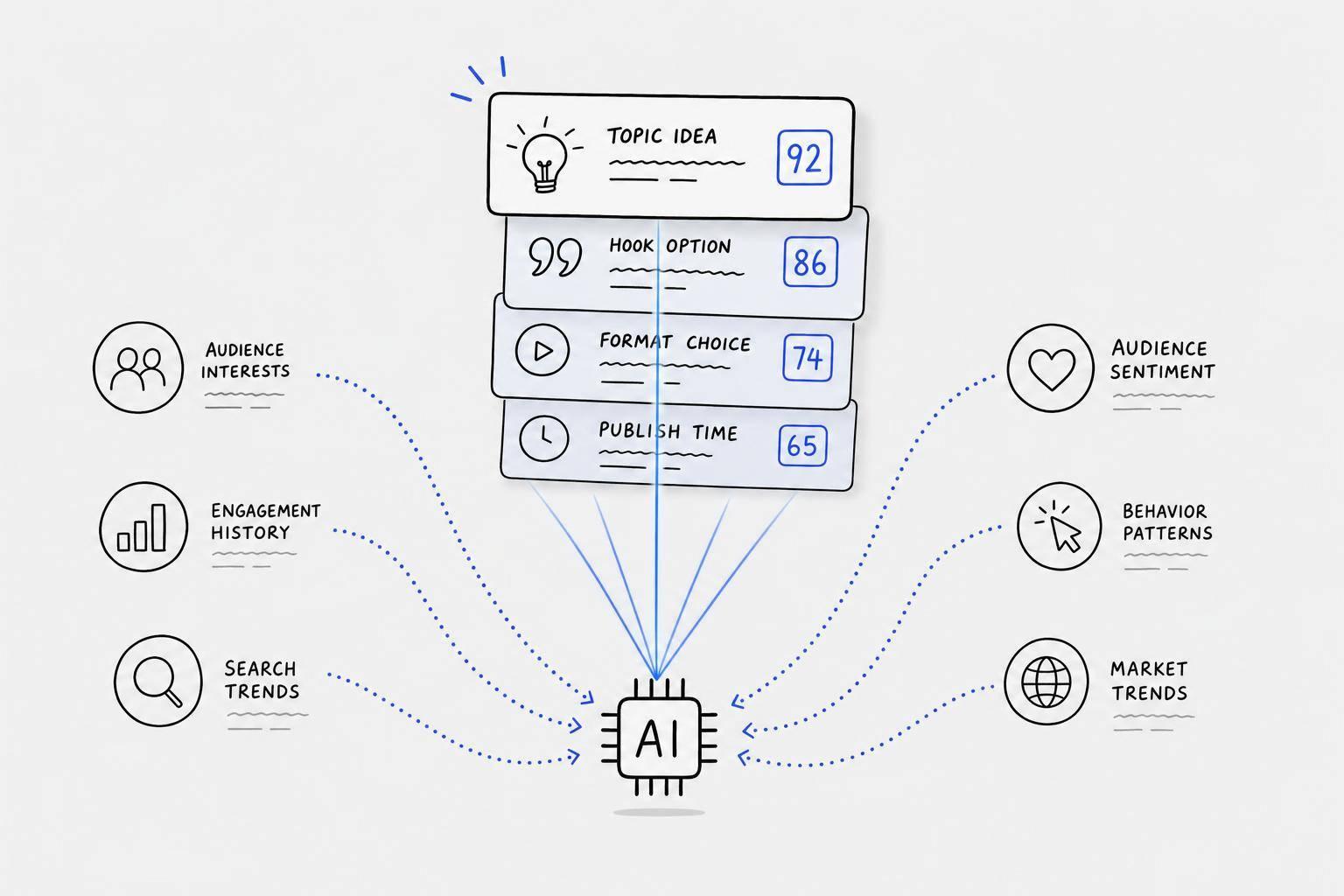
AI analyzes customer behavior to create microsegments - small, precise groups based on shared interests or needs. Using machine learning, it clusters behaviors, while natural language processing scans reviews and social media to identify emotional triggers. By applying a technique called few-shot prompting - where AI is given 3–5 examples of your brand's voice - tone and style matching can improve from 70% to over 90%. This process ensures your brand narrative aligns with different stages of the customer journey, whether someone is exploring your business for the first time or considering a purchase.
Using AI for Content Creation
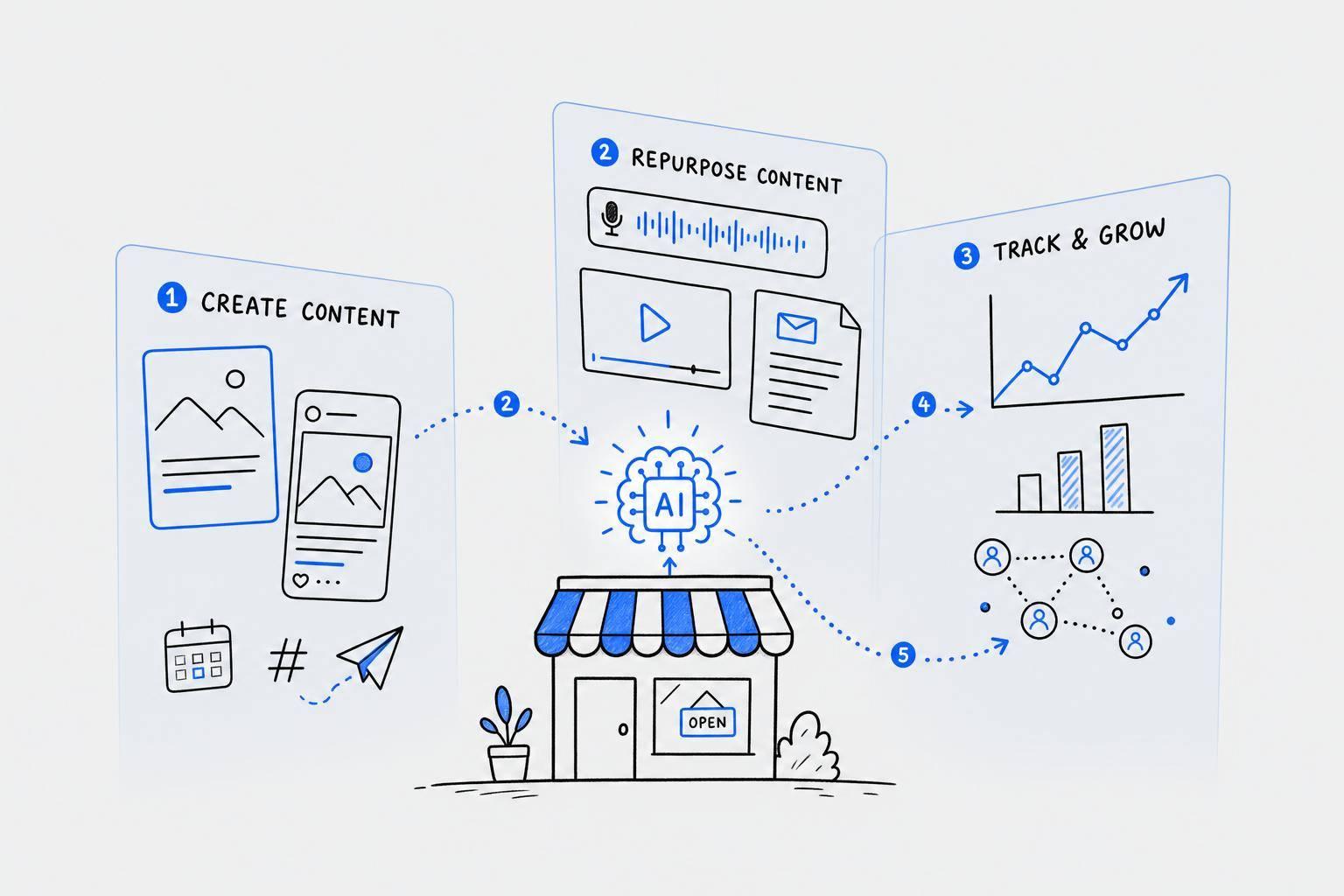
Once AI identifies audience preferences, it simplifies the content creation process. It can handle tasks like research, drafting, and repurposing, giving you more time to focus on strategy and refining your brand voice. Tools like Draft AI allow you to send raw data or even a voice note, and in return, you’ll get polished posts, carousel graphics, or video scripts. These platforms learn your writing style from existing materials, generating content that fits seamlessly with your brand. You can then review, tweak, and repurpose these ideas. This approach follows the 80/20 rule: AI does 80% of the work, while you add the final 20% that makes your brand stand out. As Jared Saucier, Founder of Allora Media, explains, "AI is the best intern you've ever had - fast, eager, and tireless. Just as you'd review an intern's work before publishing, review all AI copy for brand fit and accuracy before it goes live".
Smart Content Delivery with AI
Timing can be as critical as the story itself. AI uses predictive models to analyze user behavior and context - like device type, location, and recent interactions - to determine the best message, timing, and platform. For example, if someone checks Instagram during lunch but reads emails in the evening, AI adjusts the delivery schedule accordingly. It also identifies which platforms drive the most conversions for specific audience segments, ensuring your message lands where it matters most. AI-generated video content often sees 2–3× more engagement than static images, and adding captions can boost watch time by 40% since many platforms autoplay videos on mute. By optimizing delivery, AI ensures your brand story reaches the right audience at the perfect moment.
Step-by-Step Guide to Automating Brand Storytelling
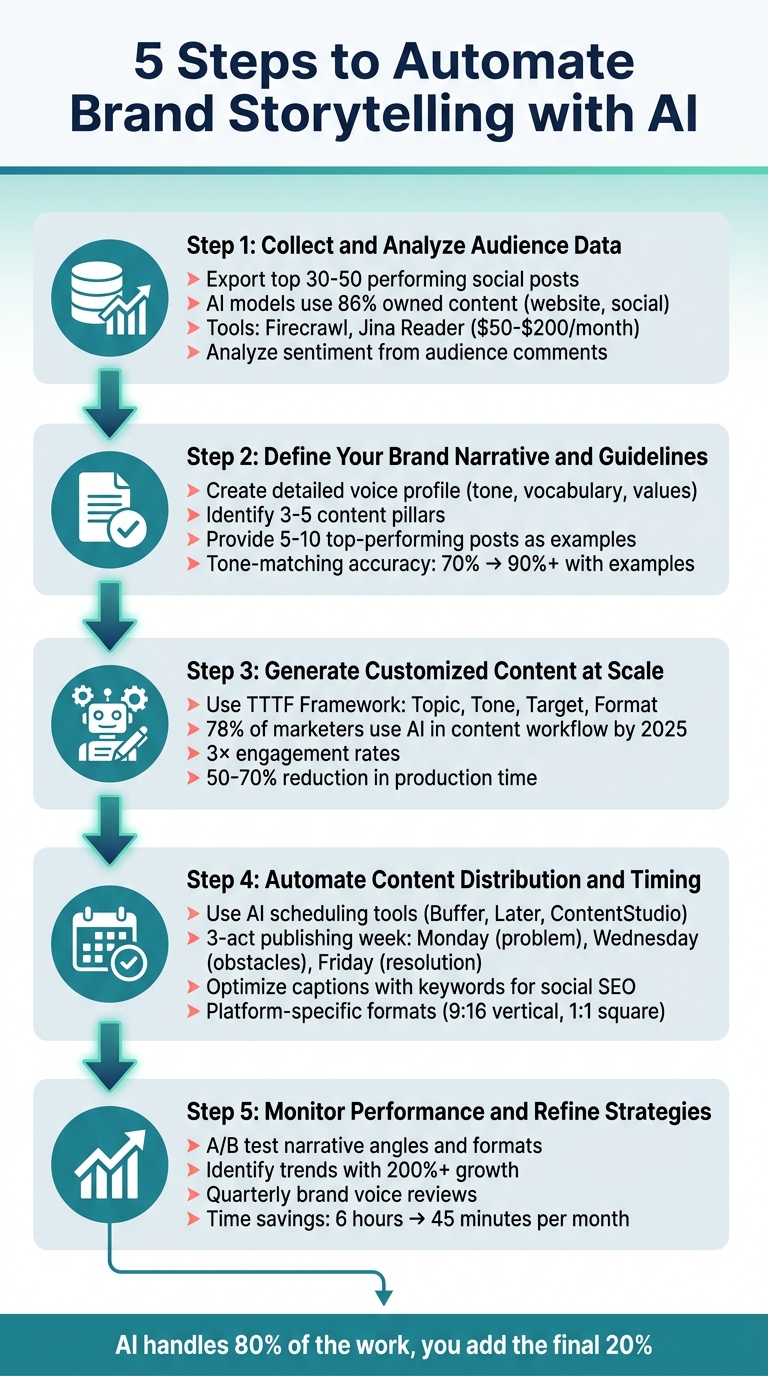
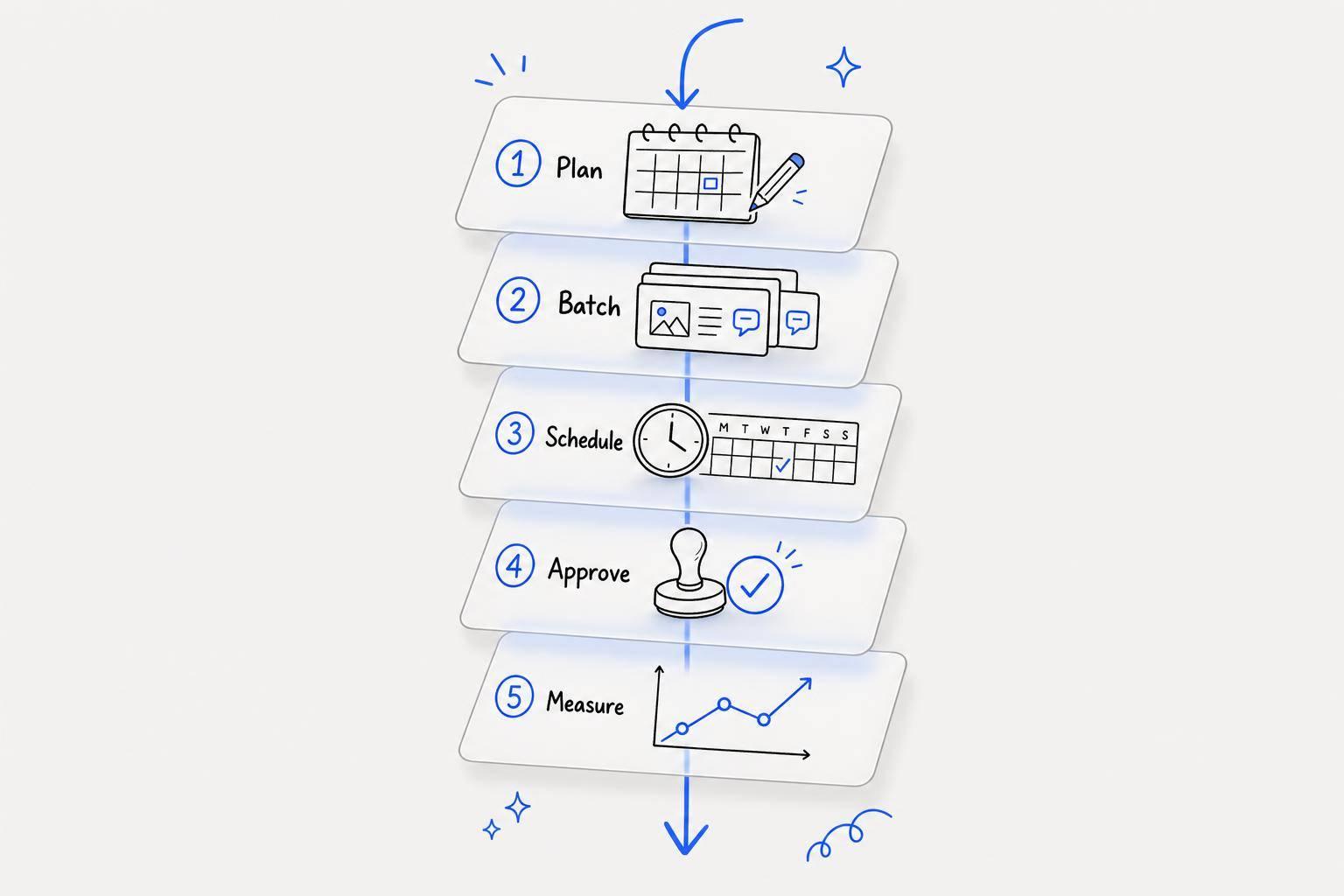
5-Step Process to Automate Brand Storytelling with AI
Automating storytelling with AI involves five key steps: gathering audience data, shaping your narrative, generating content, scheduling its release, and refining your strategies.
Step 1: Collect and Analyze Audience Data
Start by collecting data from your CRM, website analytics, and social media platforms to understand your audience's preferences. Interestingly, AI models rely on owned content - like your website and social channels - for about 86% of their input, making these sources the backbone of automated storytelling.
Export your top 30–50 performing social media posts and use an AI tool to analyze their sentence structure, formatting, and vocabulary. This step helps train AI to reflect your brand's personality. Tools like Firecrawl or Jina Reader (ranging from $50 to $200 per month) can scrape clean text and metadata from your site’s key pages, such as the About page.
Beyond performance metrics, dive into audience comments to gauge sentiment. This analysis helps you group users into categories like loyal supporters, curious onlookers, or skeptical critics.
"If you don't give AI a clear script, it will write one for you - and you might not like the ending." – Jennie Cohen, Writer and Editor
| Data Collection Method | Recommended AI Tools | Primary Benefit |
|---|---|---|
| Website Scraping | Firecrawl, Jina Reader | Extracts brand tone and visual parameters from live URLs. |
| Social Performance Analysis | Claude Projects, ChatGPT Team | Identifies patterns and engagement hooks from past data. |
| Trend Analysis | Perplexity AI, Google Trends | Highlights emerging topics based on global search growth. |
| Community Sentiment | ManyChat, Chatfuel | Automates responses and captures leads based on comment tone. |
Once you’ve mapped out audience behavior, the next step is to define your brand’s narrative.
Step 2: Define Your Brand Narrative and Guidelines
Using insights from your data, create a detailed profile of your brand’s voice - covering tone, vocabulary, perspective, and values.
Frame your brand as the "mentor" in your customers' journey, with them as the "hero" overcoming a challenge. For example, you might craft a tagline like: "We turn [frustration] into [outcome] without [common tradeoff]." Identify 3–5 content pillars, such as educational tips, customer stories, or behind-the-scenes moments, to keep your content diverse.
Include specific formatting preferences in your style guide, such as punctuation rules, exact hex codes (e.g., #A8BBA0 instead of "sage green"), and words to avoid.
To help AI capture your tone more accurately, provide 5–10 of your top-performing posts as examples. Research shows that offering 3–5 real examples can boost tone-matching accuracy from 70% to over 90%. Tools like Draft AI can analyze your content and generate new material that aligns with your brand.
Step 3: Generate Customized Content at Scale
With your brand profile in place, use AI tools to create tailored content. Platforms like Draft AI can turn raw data or voice inputs into polished posts, carousel graphics, or video scripts in minutes. They also offer templates, font and color customization, and multilingual translation.
When crafting prompts for AI, follow the TTTF Framework: specify the Topic, Tone, Target, and Format. For instance, you could prompt: "Write a 200-word LinkedIn post in a professional yet approachable tone for small business owners about overcoming content creation burnout. Use short paragraphs and include 3–5 hashtags."
By 2025, 78% of marketers are expected to use AI in at least one part of their content workflow. AI-assisted processes can triple engagement rates while cutting production time by 50–70%. Be sure to adjust outputs for platform-specific formats, like 9:16 for vertical or 1:1 for square posts, to streamline publishing.
Once your content is ready, it’s time to plan its release.
Step 4: Automate Content Distribution and Timing
Content creation is only part of the equation - timing its release is equally important. AI-powered scheduling tools like Buffer, Later, or ContentStudio can help you maintain a consistent posting schedule.
Consider a "3-act publishing week": introduce the problem on Monday, highlight obstacles on Wednesday, and share the resolution or call-to-action on Friday. Tailor content to each platform's strengths - for example, Instagram Reels for discovery, Carousels for in-depth information, and Stories for personal engagement. Use AI to retarget users who engage with your content, such as those who watch 50% or more of a Story.
Optimize captions with natural keywords and alt-text to improve social SEO, as platforms like Instagram are increasingly functioning as search engines. Align your calls-to-action with your story, using phrases like "See the steps" or "Watch the fix" instead of generic commands.
Step 5: Monitor Performance and Refine Strategies
Automation doesn’t mean you can “set it and forget it.” Continuously monitor which stories perform best, which platforms drive the most conversions, and which audience segments are most engaged. Conduct A/B tests to compare different narrative angles, posting times, or visual formats. For example, test whether a customer success story works better as a video testimonial or a carousel post.
Tools like Perplexity AI or Google Trends can help you identify emerging topics with over 200% growth. AI can then generate content around these trends, allowing your brand to join conversations early.
Schedule quarterly reviews of your brand voice profile to ensure your AI-generated messaging stays aligned with your audience’s evolving interests. Update your style guide and reference materials as your business grows and customer needs shift. With half of U.S. consumers now starting their research using AI-powered tools, staying adaptable is key.
Track both time savings and engagement improvements. AI can reduce the time spent managing social media from six hours per month to just 45 minutes, giving you more time to focus on strategy and building relationships.
Benefits of AI-Driven Brand Storytelling for Small Businesses
With AI handling your brand storytelling, you can improve efficiency, expand your reach, and deliver personalized content without breaking the bank.
Better Efficiency and Productivity
AI tools take care of repetitive tasks like research, drafting, and repurposing, allowing you to focus on crafting a compelling brand narrative. Think of it as applying the 80/20 rule - automating the routine so you can concentrate on the creative.
For example, a growth marketing agency managing 15 e-commerce brands cut their monthly design time from 90 hours to just 12 by adopting an AI-powered workflow in 2025. They also reduced revision requests by 60% and saw revenue per employee double.
Tools like Draft AI can turn basic inputs into polished, platform-ready content in no time. Instead of spending hours creating individual posts, you can produce a month's worth of content - whether it’s posts, carousel graphics, or video scripts - in just one session. This streamlined process not only saves time but also ensures your brand messaging remains consistent and scalable.
Scalability and Consistency
AI levels the playing field for small businesses, enabling them to produce content on par with larger companies. By adhering to your style guide, AI ensures your brand voice stays consistent across platforms. A detailed voice document - covering sentence structure, punctuation, and vocabulary - helps every piece of content align with your brand identity.
To achieve this, you can provide AI with 3–5 examples of your top-performing posts. This method can improve brand tone accuracy to over 90% for written content and 85% for visual elements. Advanced tools even allow you to extract exact hex codes, logos, and tone samples directly from your website, ensuring seamless alignment across all content.
AI also amplifies your content’s reach. For instance, a single blog post can be transformed into 20+ marketing assets, including social media posts, email snippets, and video scripts. This "content multiplier effect" ensures you get the most out of every piece you create. In fact, 90% of small and medium-sized businesses using AI report improved efficiency.
Affordable Personalization
Personalization used to require hefty budgets and large teams, but AI has changed that. Now, small businesses can deliver tailored content and recommendations without the need for manual effort. By analyzing real-time user behavior and demographics, AI creates messages that resonate with specific customer segments.
A full AI content stack - covering web scraping, text generation, image creation, and video tools - can cost between $210–$800 per month. That’s a fraction of what you’d spend on a full-time content creator or agency. For instance, Draft AI offers unlimited content generation starting at just $15 per month, complete with features like custom style analysis and multi-language translation.
The cost savings go beyond direct expenses. In 2022, a solo attorney used AI for SEO and formatting while keeping case summaries human-written. This hybrid approach led to a 5x boost in engagement and a 2x increase in consultation bookings. Affordable personalization strategies like these empower small businesses to compete in today’s fast-paced market.
Conclusion
AI has become a game-changer for small businesses navigating today’s content-driven world. By Q1 2026, 72% of small businesses reported using at least one AI tool in their marketing workflow. Why? Because AI handles the time-consuming tasks - like research, drafting, and repurposing - so you can focus on what makes your brand stand out.
The secret lies in striking the right balance: let AI automate 80% of the work, while you dedicate your energy to the 20% that defines your brand - your voice, personal stories, and strategic vision. This approach can help you create up to three times more content compared to traditional methods, all while maintaining your brand’s identity.
This mix of automation and human creativity is the backbone of effective storytelling. Interested in taking the leap? Draft AI offers unlimited content generation for just $15 per month. Its features include custom style analysis that adapts to your unique writing voice and top AI tools for multilingual posts. Whether you’re starting with a voice memo or a rough idea, you can transform it into polished social posts, carousels, or scripts in minutes - all while staying true to your brand.
The real hurdle isn’t budget - it’s maximizing your output. AI tools have revolutionized content creation. Start small, define your brand’s guidelines, and let AI help you share your story across every platform your audience uses.
FAQs
What customer data do I need to start AI storytelling?
To kick off AI storytelling, start by collecting information about your customers' behaviors, preferences, and engagement patterns. This data is essential for AI to generate personalized and emotionally engaging brand stories that resonate with your audience.
Focus on gathering insights into your customers' interests, values, and habits. This allows AI to create messaging that feels consistent and relatable, ensuring a strong connection with your audience across various channels.
How do I make AI match my brand voice?
To make sure AI reflects your brand voice, the first step is defining your brand’s personality, tone, and core emotions. Think about how your brand communicates - are you casual and friendly, or formal and authoritative? Once you’ve nailed this down, document it in clear guidelines. Include examples from your existing content to show exactly what works.
Next, use these guidelines to train the AI. But don’t stop there. Regularly review its output to catch any inconsistencies or missteps. Feedback is key. The more you fine-tune, the better the AI will understand your brand’s unique style.
Finally, human oversight is essential. Especially when it comes to high-stakes or customer-facing content, having a person review and refine the AI’s work ensures quality and keeps everything aligned with your brand identity. AI is a tool, but human judgment keeps it on track.
What should I review before publishing AI content?
Before publishing AI-generated content, it's crucial to review it thoroughly to ensure it aligns with your brand's voice, meets quality standards, and is free of errors. Pay close attention to maintaining a consistent tone, ensuring the message aligns with your goals, and being mindful of cultural nuances. Double-check facts, confirm the content's relevance, and make sure it resonates with your target audience. While tools like Draft AI can help shape content to fit your style, human oversight remains essential to uphold your brand's standards and foster trust with your audience.