How AI Simplifies Social Media Content Workflows

AI is transforming social media management by saving time and boosting efficiency. Here's how it helps:
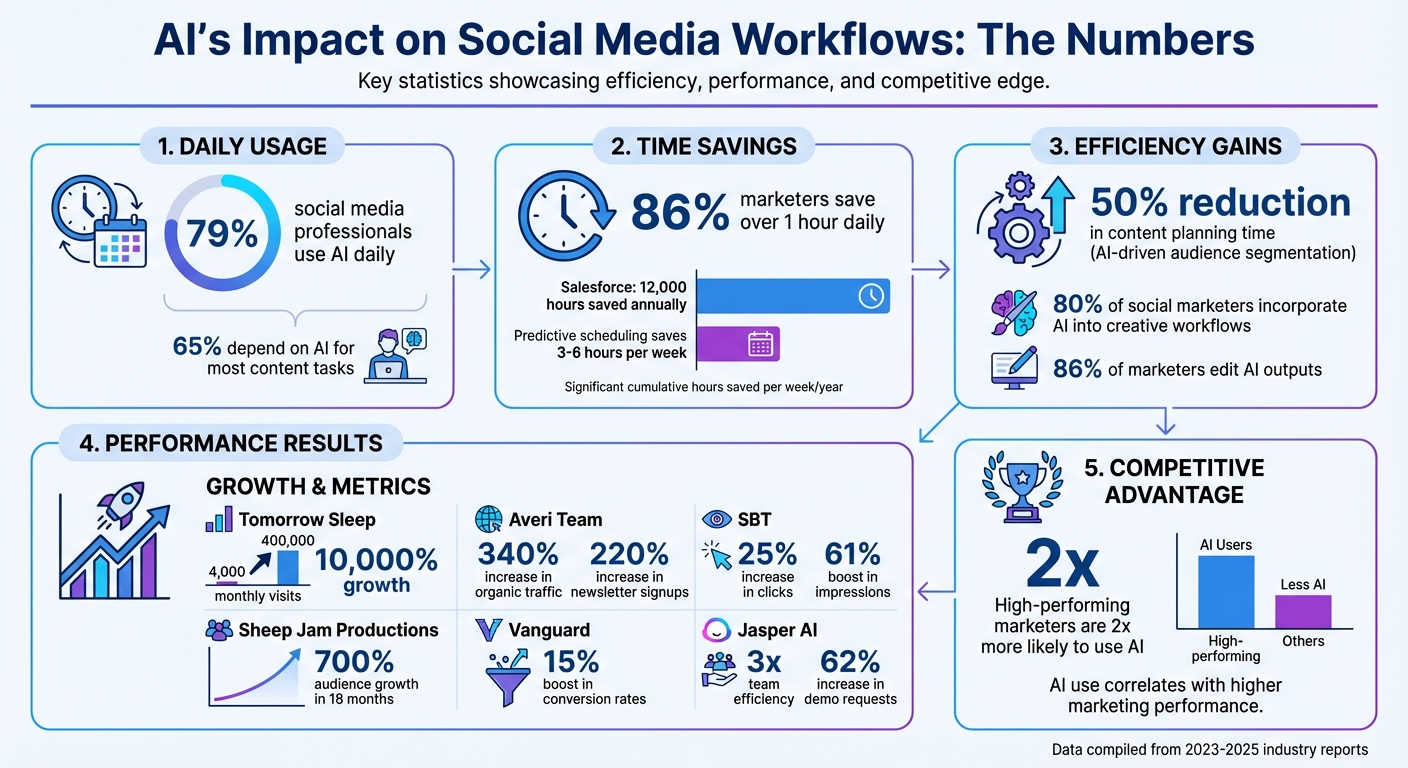
- Time Savings: 86% of marketers report saving over an hour daily, with companies like Salesforce reclaiming 12,000 hours annually.
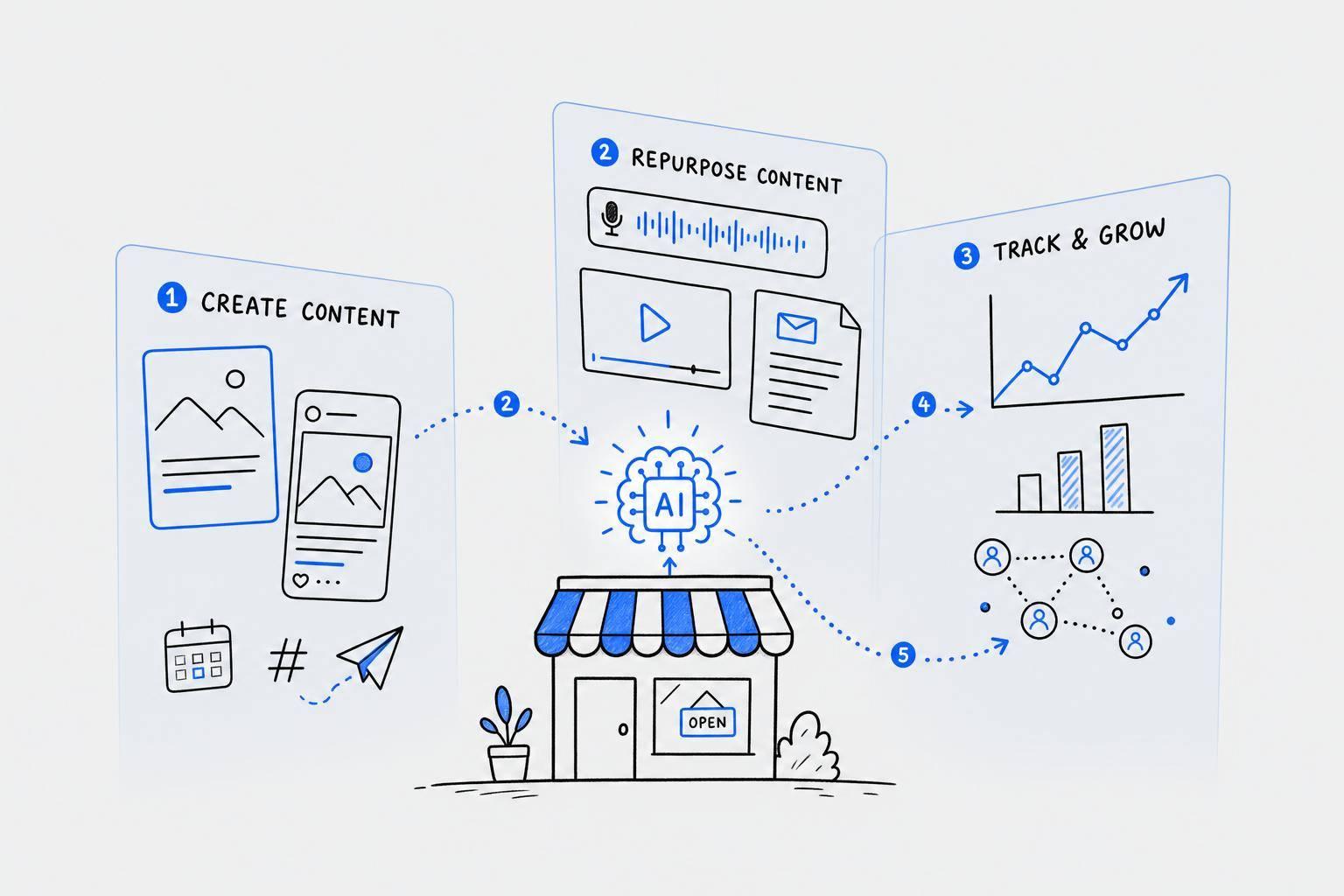
- Content Creation: AI generates ideas, creates social media posts, and repurposes content for different platforms, ensuring consistency and quality.
- Scheduling: AI analyzes audience behavior to optimize posting times, even across multiple time zones.
- Performance Tracking: AI tracks engagement metrics, refines strategies, and enhances future content based on data.
- Collaboration: Teams can streamline workflows with shared templates, centralized calendars, and faster approval cycles.
AI handles repetitive tasks, letting teams focus on storytelling and strategy. From idea generation to performance analysis, AI makes social media workflows faster and more effective.
AI Impact on Social Media Workflow Efficiency: Key Statistics
The Latest AI-Powered Content Creation Workflow for Business (Speed Challenge!)
sbb-itb-9f5fe42
How AI Improves Content Planning and Ideation
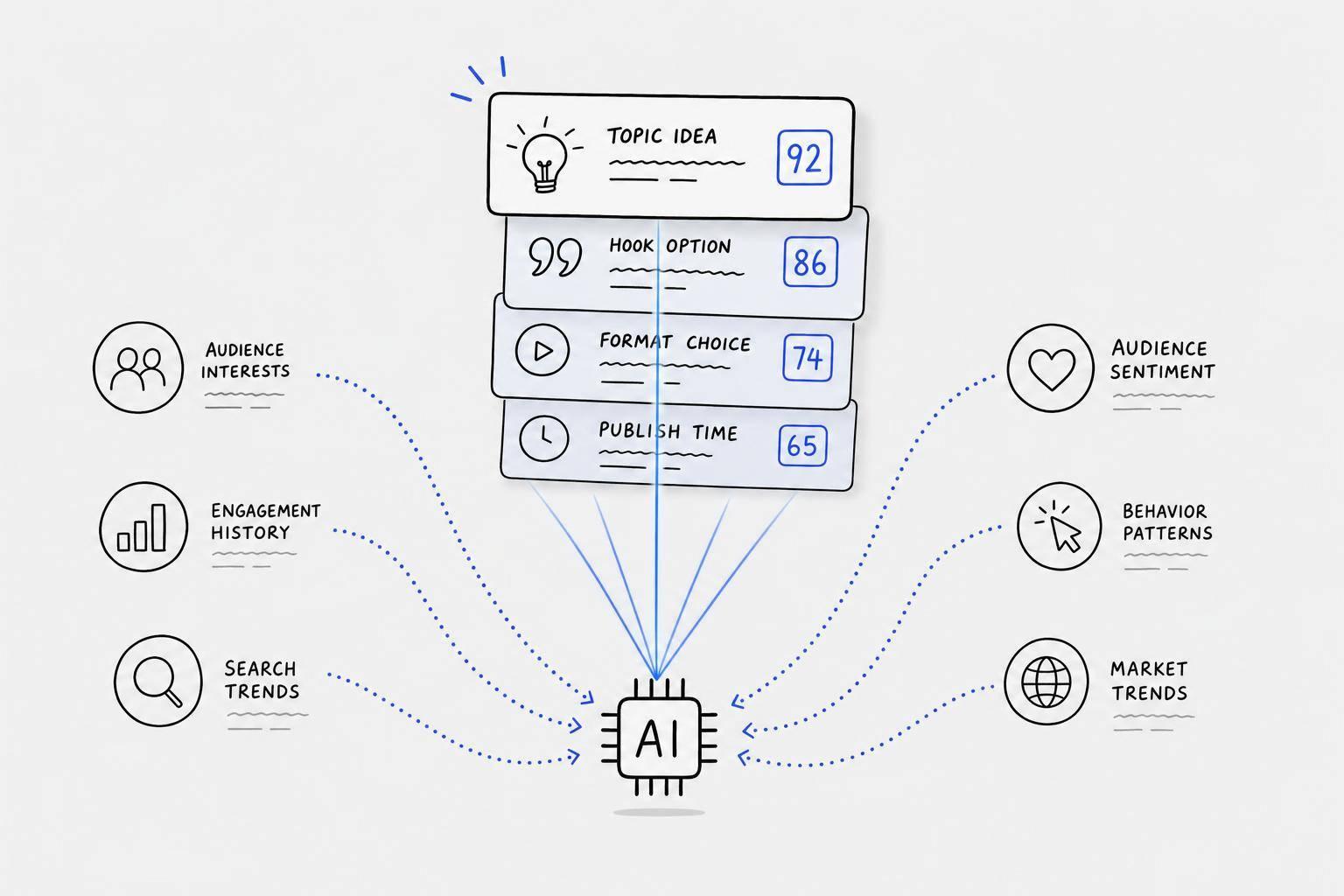
The toughest part of managing social media isn't hitting "post" - it's deciding what to post. AI steps in to eliminate this roadblock by transforming messy, unstructured data into clear, actionable campaign plans. Instead of staring at a blank screen, teams can input meeting transcripts, voice notes, or technical documents into AI tools and receive organized content pillars within minutes. This structured approach gives teams a solid starting point for creating varied, platform-ready content using a social media content creation checklist.
Turning Raw Data into Content Ideas
AI shines when it comes to breaking down complex information into easy-to-use social content. By analyzing internal data like stakeholder notes or whitepapers, these tools can identify key themes and insights. For example, Draft AI goes a step further, taking voice memos or raw data and transforming them into polished social posts, complete with platform-specific formatting and brand-aligned language.
Consider the case of Tomorrow Sleep: in 2023, they used an AI-powered content intelligence platform to skyrocket their monthly website visits from 4,000 to 400,000. AI also amplifies creativity by generating multiple variations of a single concept. Instead of coming up with one idea, it can produce 5–10 different approaches, offering a variety of hooks, formats, and angles. Bianca Shaw, Head of Social Media & Digital Reputation at Caesars Entertainment, shared her experience:
"AI Assist in Sprout Social is so helpful... managing a portfolio of brands as large as Caesars, copy redundancy can happen - so having the AI Assist functionality to generate variations is a great tool for workflow efficiency".
Building Shared Content Calendars
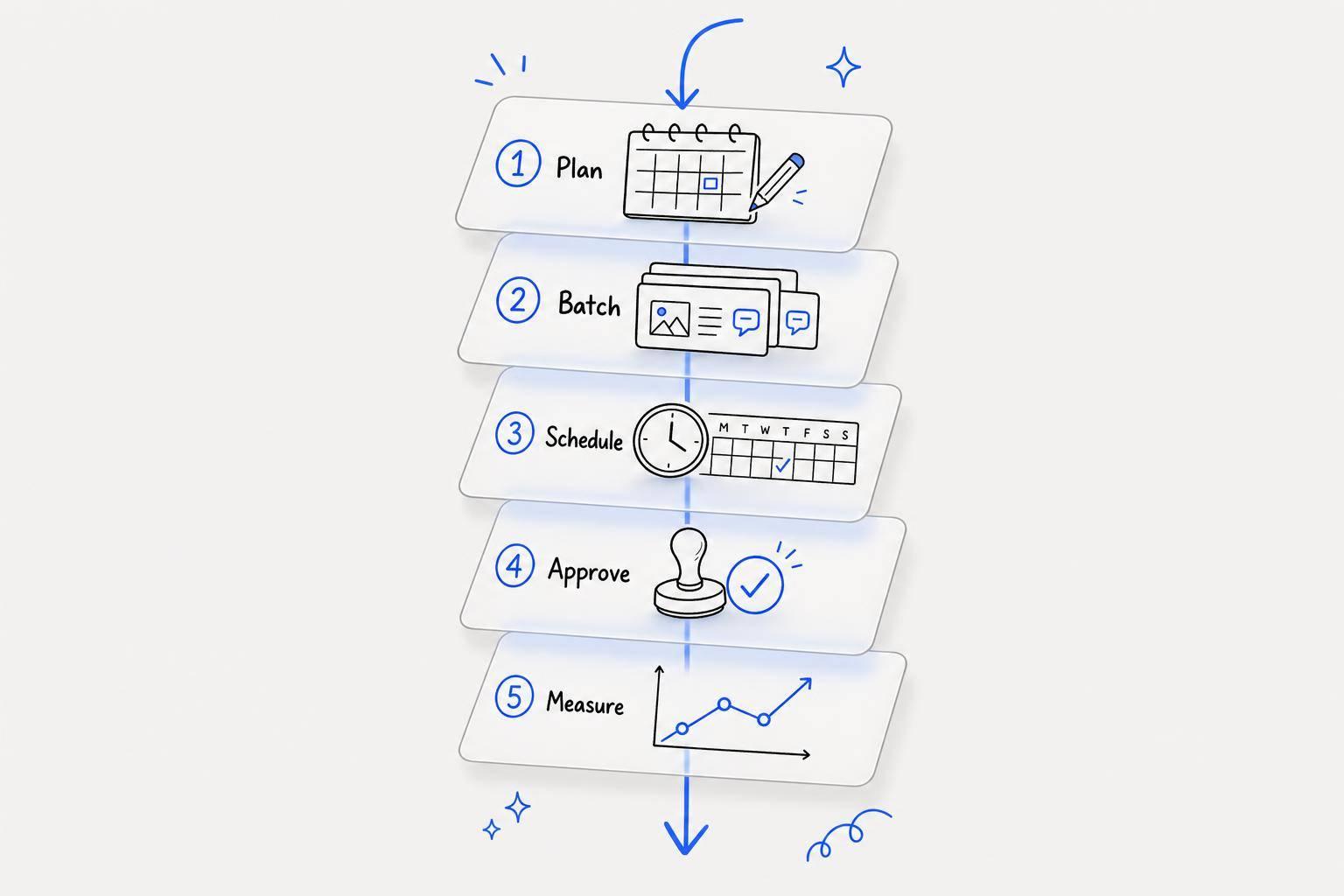
Once ideas are generated, organizing them effectively is the next step. AI-powered content calendars do more than just display dates - they analyze past engagement data to recommend optimal posting times, balance content types to keep audiences engaged, and allow for drag-and-drop rescheduling when plans change. This flexibility is crucial, as AI-driven audience segmentation has been shown to cut content planning time by 50%.
Some tools even store successful prompts, templates, and guidelines in one centralized workspace, so teams don’t have to start from scratch with each campaign. For instance, over an 18-month period ending in 2024, Sheep Jam Productions leveraged Social Champ's AI-powered calendar and monitoring tools to manage multiple accounts. The result? A staggering 700% growth in audience size. Their system allowed them to visualize their content mix, coordinate campaigns across platforms, and adapt strategies in real-time without losing momentum.
Using AI for Content Production and Team Collaboration
Once your ideas are mapped out, the next step is turning them into polished, on-brand posts while ensuring your team stays aligned on tone, visuals, and deadlines. The trick lies in balancing automation with human oversight.
Co-Writing and Editing Posts with AI
Scaling content often comes with the challenge of maintaining a consistent voice across multiple posts. AI tools, trained on your company's style guides and past messaging, can help by generating drafts that already match your brand's tone and voice. This eliminates the dreaded "blank page" syndrome and gives writers a solid starting point.
AI is also great at repurposing long-form content, like blog posts or webinars, into bite-sized, platform-specific snippets. Instead of manually reworking a lengthy article into posts for Twitter, LinkedIn, or Instagram, AI can quickly extract key points and reformat them for each platform - all while keeping your messaging consistent. Once the content is drafted, pairing it with visuals ensures your posts stay cohesive and on-brand.
Using Templates and Visuals Consistently
Writing is just one piece of the puzzle - visual consistency is just as important. AI-powered asset libraries, often referred to as "Stacks", centralize your approved templates, brand colors, fonts, and logos, making it easy for every team member to access the same materials. By uploading your brand guidelines once, you ensure that all future content aligns with your standards.
The most efficient teams use a blend of human creativity and AI automation. For instance, a designer might create the initial concept, and then AI generates variations or adapts assets across platforms. Humans step in for the final quality check. This approach automates repetitive tasks while keeping creative control intact. In fact, 80% of social marketers now incorporate AI into their creative workflows.
Tools like Draft AI simplify this process even further. They combine ready-to-use templates with customizable fonts, colors, and layouts. Teams can upload photos, tweak text, and export platform-ready visuals - all without juggling multiple design tools. This keeps production streamlined while ensuring every post looks cohesive and professional.
Faster Review and Approval Cycles
After content is created and branded, the next step is getting it approved quickly. AI accelerates this process by generating multiple variations - different headlines, captions, and tones - so stakeholders can review options without waiting for manual rewrites. This reduces the back-and-forth and speeds up decision-making.
AI can also handle an initial review, fixing redundant phrases, ensuring active voice, and adhering to style guidelines. This allows editors to focus on the bigger picture, like strategy and storytelling, rather than spending time on minor corrections.
For example, in 2023, investment firm Vanguard used the AI platform Persado to personalize ad messaging while staying compliant with strict financial regulations. The result? A 15% boost in conversion rates. Their workflow let AI manage variation generation and compliance checks, while human reviewers handled strategic decisions - proving that speed and quality can go hand in hand.
Automating Publishing and Performance Tracking
Once your content gets the green light, the next step is making sure it’s published consistently and that you know what’s actually working. AI steps in here, linking scheduling, distribution, and analytics into a seamless system. The result? You’re not just posting content - you’re building a smarter, more efficient workflow. Let’s dive into how AI tailors content for different platforms and simplifies scheduling and analytics.
Adapting Content for Different Platforms
A one-size-fits-all approach doesn’t work when it comes to social platforms. What grabs attention on LinkedIn might fall flat on TikTok or Instagram. AI bridges this gap by taking a core "anchor" piece - like a blog post or webinar - and breaking it down into platform-specific formats. That single blog post can become AI tools for LinkedIn carousels, Twitter threads, Instagram captions, or even TikTok scripts, all while preserving your main message.
Tools like Draft AI make this process even easier. They offer pre-built templates for various formats, so you’re not starting from scratch. You can tweak fonts, colors, and upload images to match your branding, or even translate content into multiple languages. This ensures your messaging stays consistent while adapting to each platform’s unique style and audience preferences.
Here’s a real-world example: Between March and May 2025, the Averi Team published over 100 pieces of content in just 60 days using an AI-driven workflow. By combining AI for initial drafts and human editors for polishing, they saw a 340% jump in organic traffic and a 220% increase in newsletter signups. Their strategy? Create one standout "anchor" asset and let AI spin it into a full suite of deliverables for every channel. From there, everything was scheduled for posting, keeping their strategy flexible and efficient.
Scheduling Posts Across Platforms
Timing is everything. AI can analyze your audience’s behavior and engagement trends to pinpoint the best times to post on each platform, saving you the guesswork. This is particularly helpful for teams operating across multiple U.S. time zones. For instance, a post scheduled for 8:00 AM EST could easily go live at 5:00 AM PST without anyone needing to wake up early.
Centralized dashboards simplify the process even further. Instead of juggling tools like Canva, Slack, and LinkedIn AI scheduling tools, AI-powered workspaces let you manage everything - planning, creating, and scheduling - in one place. Some tools even go a step further, running on autopilot to generate and schedule weekly posts based on themes or keywords you set once.
Take Salesforce as an example. In 2025, their social media team used automation to manage over 150 social channels, saving an estimated 12,000 hours annually and boosting efficiency tenfold. For smaller teams, the time saved is just as impactful. Predictive scheduling alone can free up three to six hours a week that would otherwise be spent on manual posting tasks. With AI optimizing post timing, analytics can then guide future strategies.
Using Analytics to Improve Future Content
Publishing is just the beginning. The real power lies in using performance data to shape your next steps. AI tracks key metrics like reach, engagement, and audience sentiment, feeding this data back into your workflow to refine future prompts, templates, and schedules. For instance, if a particular caption style or visual format consistently outperforms others, the AI will prioritize that approach moving forward.
"AI-driven audience segmentation reduced our content planning time by 50% last quarter." - Ashwin Thapliyal, Head of Marketing, Exemplifi
AI also makes A/B testing a breeze. You can generate multiple caption options - whether they’re professional, playful, or question-driven - and let the data reveal what resonates most with your audience. Over time, this creates a feedback loop that sharpens your content and ensures it aligns with what your audience actually engages with.
Think of AI as a constantly learning system. Regularly review and update your prompt libraries based on your top-performing posts. This way, your AI evolves alongside your audience’s preferences, keeping your content strategy fresh and effective.
Creating Long-Term AI Workflows
Getting AI up and running is one thing, but creating a system that keeps improving over time? That’s a whole different ballgame. The key lies in setting up clear roles, consistent standards, and shared resources. Without these, even the most advanced AI tools can end up causing more headaches than solutions.
Assigning Team Roles and Responsibilities
A lack of clarity around roles can throw a wrench into any workflow. To avoid this, define who’s responsible for each step. Who drafts the initial prompts? Who reviews the AI-generated content? Who gives the final approval and hits publish? Not all content needs the same level of oversight, either. For example, a quick educational post might only need a light edit, while a major product launch announcement could require input from PR and leadership. When everyone knows their role, teams can work more efficiently, make quicker decisions, and get more done. Setting routine deadlines - like having drafts ready by Tuesday for Thursday approvals - keeps everything on schedule.
Once roles are nailed down, the next priority is establishing quality and compliance standards.
Setting Quality and Compliance Standards
With roles in place, it’s time to focus on quality control. Human oversight remains crucial to ensure content is accurate, on-brand, and aligned with your goals. Even though 85% of marketers now use AI for content creation, 86% still edit AI outputs. Start by creating a "Terminology Dictionary" and defining your brand voice - whether it’s professional, conversational, or playful. Feeding AI models 10–15 examples of your best human-written content can save editing time later. For industries with strict regulations or sensitive topics, adding a compliance step - where legal or PR teams review high-stakes content - can help maintain accuracy without creating bottlenecks.
Building Prompt and Template Libraries
Once your team roles and quality standards are set, it’s time to create shared resources that streamline content production. A centralized library of prompts and templates can be a game-changer. Organize your library around key content categories, like educational posts, behind-the-scenes stories, or promotional campaigns. Each prompt should include five essential elements: audience context, format guidelines (length, structure), brand voice instructions, content requirements (keywords, CTAs), and quality standards.
A great example: In 2025, Jasper AI’s marketing team introduced structured prompt templates and automated workflows, boosting team efficiency by threefold and increasing demo requests by 62%. Keep your library up-to-date with regular reviews to refine templates over time. Tools like Draft AI can simplify this process by offering customizable templates that match your brand’s fonts, colors, and formats.
"Success isn't about using AI tools - it's about implementing systematic frameworks that combine AI efficiency with human strategy." - Averi Team
The ultimate goal? To create a system where anyone on your team can produce high-quality, on-brand content in minutes instead of hours - all while maintaining the consistency and authenticity your audience expects. By putting these foundational elements in place, your AI workflows can evolve right alongside your team’s needs.
Conclusion: AI's Role in Social Media Workflows
AI has become a cornerstone of social media operations, transforming how teams approach content creation and management. Consider this: 79% of social media professionals use AI daily, and 65% depend on it for most of their content tasks. High-performing marketers are over twice as likely to leverage AI compared to their less successful counterparts. The message is clear - sticking to manual workflows alone can leave teams struggling to keep up.
The numbers speak for themselves. Salesforce reported saving 12,000 hours annually, while SBT achieved a 25% increase in clicks and a 61% boost in impressions - all thanks to integrating AI at every stage of their workflow. From brainstorming ideas to analyzing performance, AI is proving its value.
"The greatest opportunity it presents is not merely scale, it is smarter scale." - Dima Botezatu, Mixpost
But here’s the thing: the real magic happens when AI efficiency meets human creativity. AI handles repetitive tasks like resizing images, generating caption variations, and scheduling posts, freeing up humans to focus on what they do best - crafting compelling stories, setting creative direction, and making strategic decisions. This "human-in-the-loop" approach ensures that content retains the authenticity and emotional depth that algorithms alone can’t achieve.
Tools like Draft AI make this process even easier, allowing teams to create posts, carousels, and scripts in minutes. With customizable templates that align with your brand's voice, these tools help maintain consistency across platforms while saving time. By integrating AI into your workflows, your team can produce more content, focus on big-picture initiatives, and ultimately amplify its strategic impact. AI isn’t just about streamlining processes - it’s about empowering teams to work smarter and achieve more.
FAQs
How can AI simplify the process of creating and organizing social media content?
AI simplifies the process of creating social media content by turning raw data, trending topics, or even a basic idea into a range of content concepts. It can scan industry news, analyze hashtags, and study audience behavior to suggest relevant and timely topics. This eliminates the daunting task of starting from scratch. Plus, AI organizes these ideas into themes, formats (like carousels or short videos), and even schedules posts, delivering a complete content plan in just minutes.
Draft AI takes it up a notch. You can upload raw data or even voice notes, and it instantly generates polished posts, scripts, or carousel designs. With tools like customizable templates, multilingual translation, and AI-powered writing styles, it transforms your ideas into ready-to-publish content - all within one efficient workspace.
How does AI help schedule social media posts across time zones?
AI takes the guesswork out of scheduling by analyzing data like follower activity, engagement patterns, and platform usage to pinpoint the best times to post for audiences across the globe. Forget about juggling time zones - AI suggests the ideal posting windows for regions like the U.S., Europe, and Asia, making it easier to connect with your audience no matter where they are.
What’s more, AI keeps up with real-time trends and seasonal shifts, ensuring your posting schedule stays aligned with changing audience behaviors. For those using Draft AI, these insights are seamlessly woven into the content creation process. This means teams can focus on crafting and scheduling posts effortlessly, all while maximizing reach and engagement across multiple time zones.
How does AI make social media teamwork faster and more efficient?
AI takes the hassle out of social media management by automating tasks that often eat up valuable time. Think about the hours spent brainstorming ideas, drafting posts, scheduling content, or analyzing basic metrics - AI can handle all of that. Plus, it keeps everything organized by centralizing assets like brand templates and files, making real-time collaboration a breeze. No more hunting for misplaced resources or redoing work from scratch.
On top of that, AI tools can recommend optimal posting times, tailor content for specific platforms or target audiences, and even analyze audience behavior to fine-tune strategies. By taking care of the repetitive stuff, it gives teams back their time to focus on what really matters: creativity and strategy. Tools like Draft AI, for example, can turn raw data or voice memos into ready-to-go posts, scripts, or designs. And since everything happens in a shared workspace, reviews and approvals move faster than ever.