Best Practices for Multilingual Social Media Content
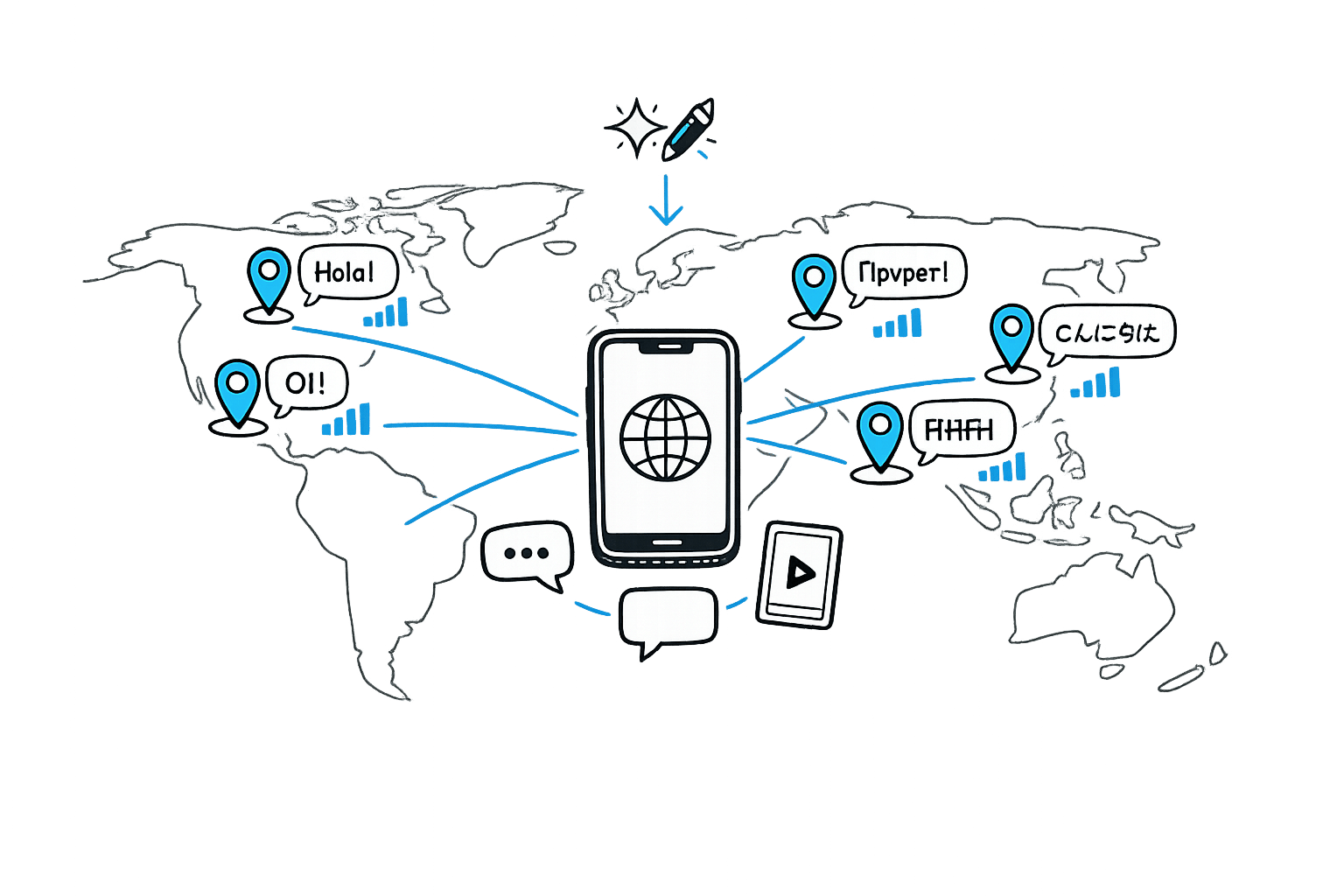
Creating social media content for multiple languages is not just about translation. It’s about making your message resonate with local audiences by considering things like humor, visuals, and regional preferences. Here’s what you need to know:
- Why it matters: 73% of consumers prefer buying in their native language. Businesses using multilingual strategies see 1.5x higher customer retention.
- Challenges: Manual translation is expensive and time-consuming, costing $0.10–$0.30 per word and taking weeks to complete.
- Solution: AI tools like Draft AI reduce costs by 50–70% and cut production time from weeks to days. They help maintain your brand’s tone across languages while allowing for human edits to ensure precision.
Key practices:
- Focus on meaning, not just translation (e.g., Nike’s localized slogans).
- Use visuals that align with local preferences (e.g., colors, imagery).
- Leverage AI to draft content, then refine it with native speakers.
- Choose platforms based on audience habits (e.g., WeChat in China, TikTok for younger users).
- Monitor performance by region to improve future campaigns.
AI tools like Draft AI simplify the process, offering multilingual content creation, brand tone consistency, and cost-effective solutions for businesses. Start small, refine based on data, and expand to reach global audiences without overspending.
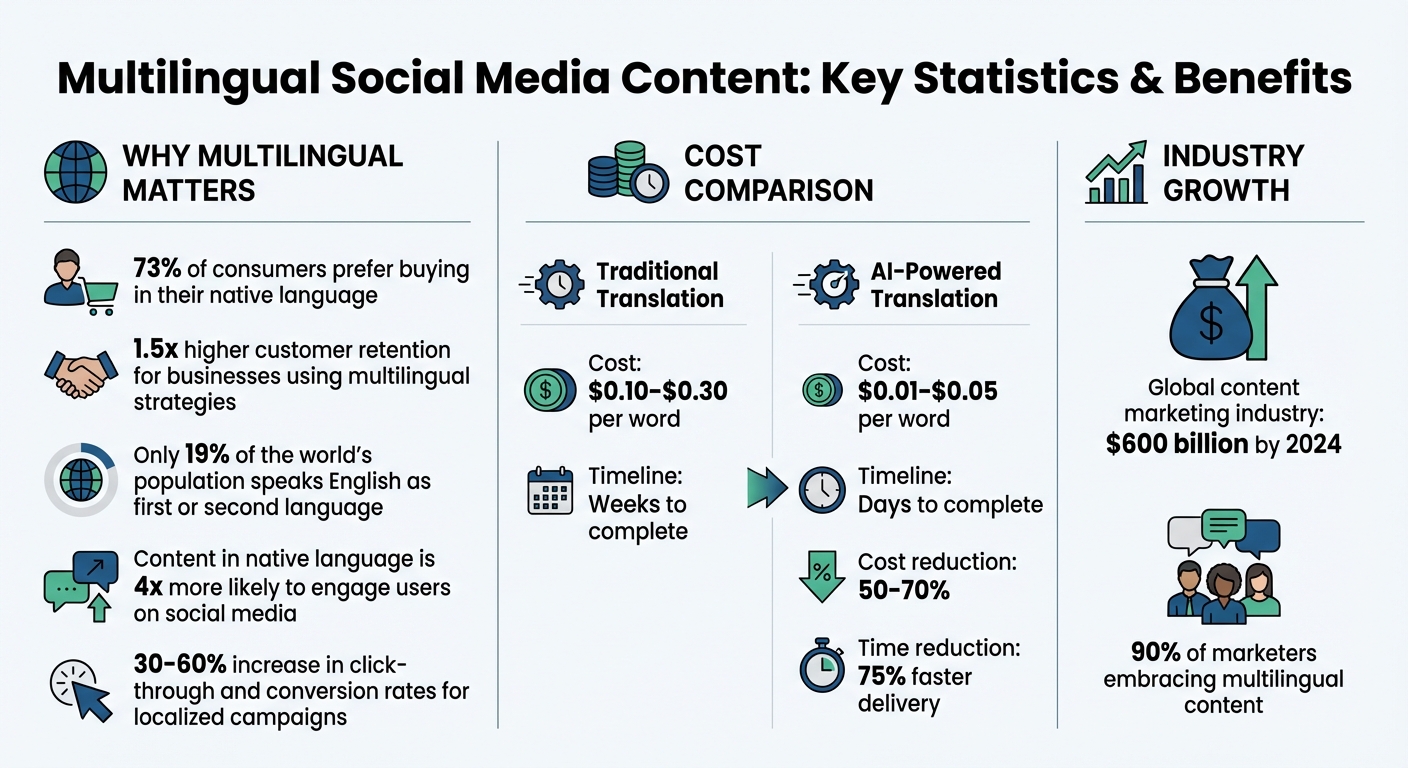
Multilingual Social Media Content: Key Statistics and Cost Comparison
Best Practices for Creating Multilingual Social Media Content
Focus on Cultural Adaptation, Not Just Translation
Translation deals with words. Localization deals with meaning. Take Nike Japan's approach: instead of directly translating "Just Do It", they used #Minohodoshirazu, which reflects a culturally relevant sense of pushing boundaries. This is the essence of transcreation - going beyond literal translation to create content that resonates emotionally with a specific audience.
Visuals also play a huge role in cultural adaptation. For example, colors carry different meanings across cultures - red symbolizes luck in China but mourning in South Africa. Similarly, imagery should align with local aesthetics, from clothing styles to weather conditions. A snowy winter coat promotion might work in New York but feels out of place in Singapore's tropical climate. IKEA Austria nailed this with their Pride Month campaign in June 2024, using the hashtag #Liebesmårt. By blending the German word for love ("Liebe") with their Swedish-inspired branding, they connected with Austrian audiences while staying true to their global identity.
Choosing the right platform is equally important. WeChat reigns in China, while Facebook and Instagram dominate in Europe and the Americas. And here's a key stat to consider: only about 19% of the world's population speaks English as a first or second language. Assuming one platform or language works globally means leaving out a massive audience.
"If you're creating content for youngsters, TikTok is great, but if you need to target a wider age range, you should try using Facebook. Need to target professionals? LinkedIn is better."
- Shae Vian, Digital Marketing Specialist.
This cultural awareness also sets the stage for AI tools to help you maintain your brand voice across languages.
Use AI Tools to Maintain Consistent Brand Voice
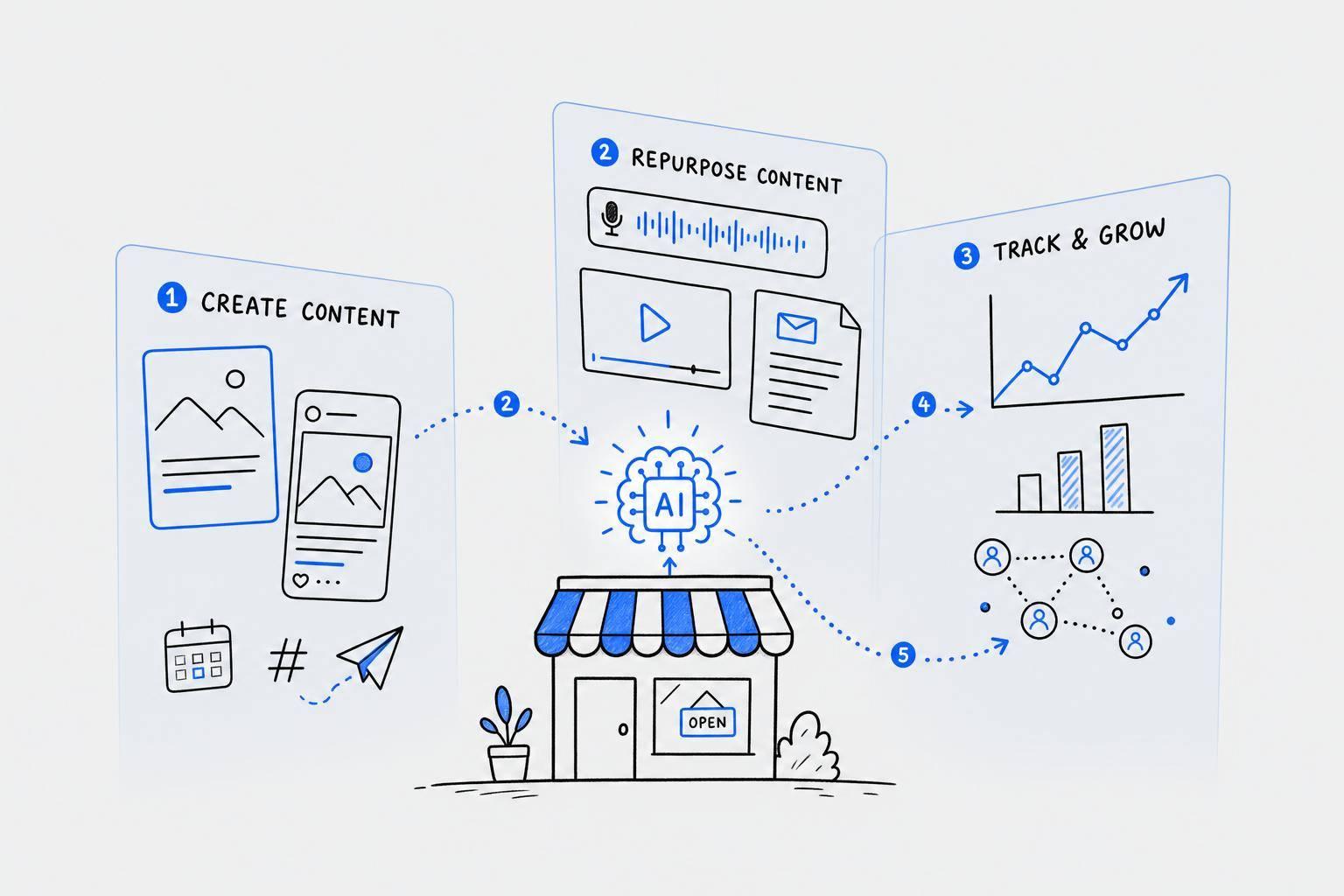
Once you've adapted your visuals and messaging, keeping your brand's voice intact across multiple languages becomes the next challenge. Balancing cultural nuances with your brand's personality used to require costly translation teams and endless revisions. But now, Automated content creation tools can simplify this process. By combining AI-generated drafts with human expertise, you can maintain consistency while saving time and money.
Take Popsa, a photobook app, as an example. In June 2025, they integrated Lokalise with design tools like Figma and Storyblok to manage marketing scripts in six languages. This hybrid workflow cut translation time by 75% and reduced costs by 20%. It’s a perfect example of how blending AI efficiency with human cultural insights can produce high-quality results.
Platforms like Draft AI take this concept even further. You define your brand's tone once, and the tool applies it across different languages. Whether you're crafting professional posts for LinkedIn or playful content for TikTok, Draft AI ensures your voice stays consistent. You can even send raw data or voice notes, and the platform will deliver content tailored to your tone in minutes.
"We use Emplifi Social to inform our three different buckets of content: global, local, and influencer. We're able to look at what the engagement is across these buckets... This allows us to recognize local successes and adopt best practices."
- Rachel Bouvier, Senior Digital Analyst at Global Digital.
By tracking what resonates in different markets, you can refine your AI-powered content strategy and replicate success across regions.
Apply Multilingual Translation Features Correctly
Even with a consistent brand voice, effective messaging hinges on using multilingual translation features wisely. AI translation has come a long way, but it’s not a one-size-fits-all solution. While professional translation can cost $0.10–$0.30 per word, AI can deliver results for $0.01–$0.05 per word. However, saving money is meaningless if your message feels robotic or misses key cultural nuances.
The key is knowing when to rely on AI and when to invest in transcreation. Straightforward AI translations work well for technical product descriptions or specs. But for marketing slogans, humor, or emotional messaging, transcreation is essential. Netflix showcased this approach in August 2024 when promoting "Emily in Paris" in Brazil. They used the slang term "safada" (naughty/cheeky) in captions, perfectly aligning with the show's playful tone and Brazilian humor.
Draft AI simplifies this process by creating culturally-aware content from the start. Rather than translating English posts after the fact, you can use AI to craft posts directly in your target language. The platform even offers templates and customization options, allowing you to tweak formatting, fonts, and colors to fit regional preferences while maintaining your brand's voice.
"A good translation makes sure the message still feels like it came from your brand, no matter the language."
- Lokalise.
Don’t overdo localization. Using too much local slang can make your brand come off as inauthentic or even cringe-worthy. Stick to simple, natural language that aligns with your core identity. Regularly review AI-generated content to avoid overly formal or stiff translations, a common issue with machine-generated text.
sbb-itb-9f5fe42
How to Streamline Multilingual Content Creation with AI Tools
Step 1: Generate Ideas and Plan Content
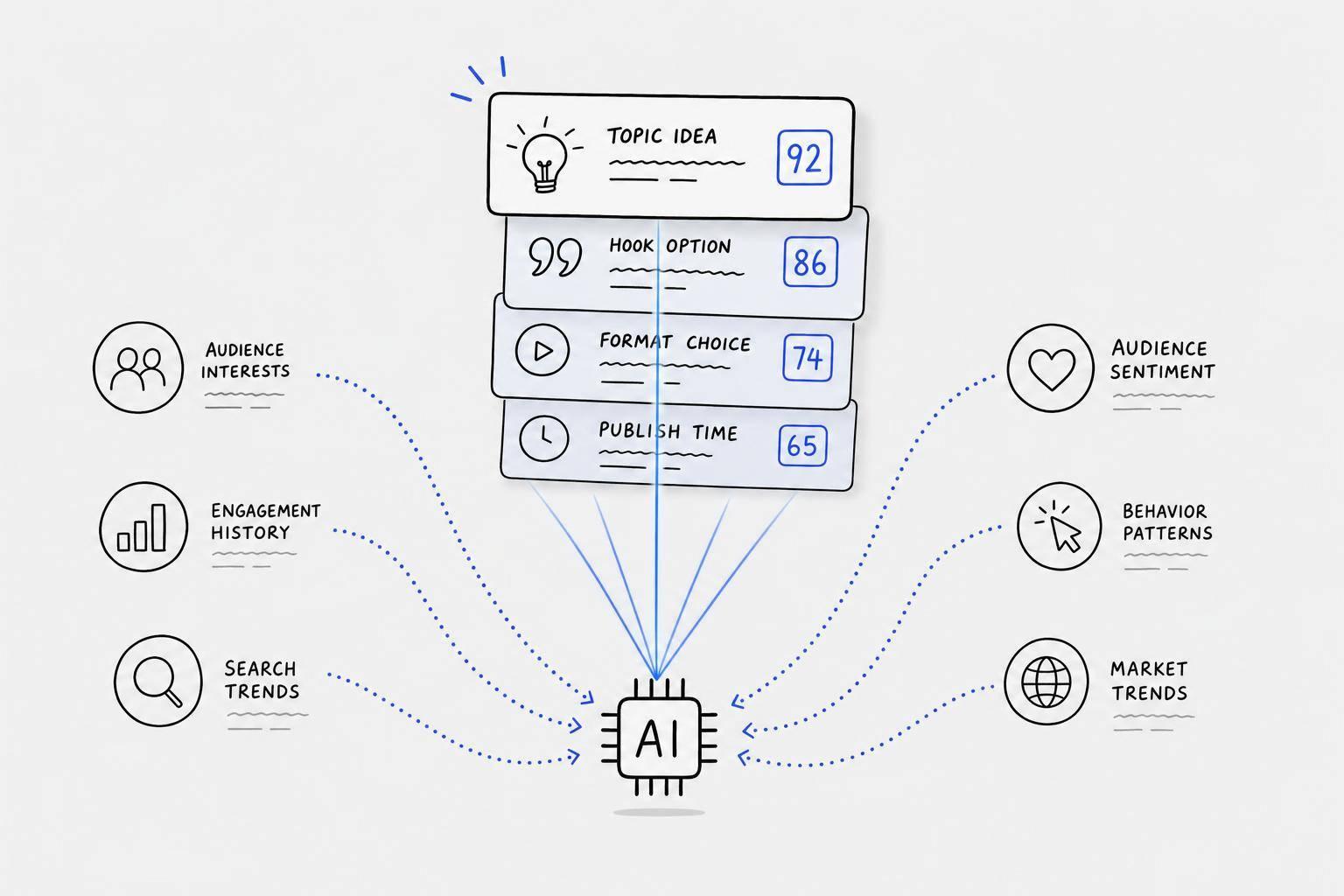
AI tools can help you pinpoint what resonates with specific language audiences. Instead of simply translating existing ideas, use keyword research tools to uncover local phrases and popular search terms in your target languages. This way, your content feels more natural and relevant from the start.
Platforms like Draft AI make this process even easier. By providing details about your business or blog, the tool generates a collection of content ideas displayed as swipeable cards. These cards often include concepts with viral potential, allowing you to save the ones that match your brand’s voice. This ensures you're not just translating ideas but creating content that fits the cultural landscape of each market.
"People connect more deeply when an ad 'speaks' their language and culture."
- Tanmay Ratnaparkhe, Co-founder, Predis.ai
It’s also important to focus on specific locales rather than broad categories. For example, instead of targeting "Spanish", refine your approach to Mexican Spanish or Castilian Spanish. This accounts for differences in humor, idioms, and buying behaviors. Why does this matter? Because content in a native language is 4x more likely to engage users on social media.
Once you’ve gathered culturally relevant ideas, the next step is turning them into localized content.
Step 2: Translate and Localize Content
With your ideas ready, the next step is translation and localization. A hybrid approach - combining machine translation for speed with human editing for cultural nuances - offers the best results. This method allows for quick scaling without compromising on quality.
Draft AI’s multilingual translation feature is available to all users, even on the free plan. It enables you to create content directly in your target language or switch between languages effortlessly. For Pro plan users, the platform takes it a step further by analyzing your writing style from previous posts and applying that tone across all languages, ensuring your brand personality stays consistent.
To maintain consistency across campaigns, use tools like AI-managed glossaries and translation memories. These features help avoid discrepancies, such as using different terms for the same product feature in various regions. Localization isn’t just about text - it extends to hashtags, emojis, and microcopy. For instance, some emojis, like the thumbs-up, can carry negative connotations in certain cultures.
Step 3: Format and Adapt Visuals
Translation is only part of the equation. Some languages, like German or Russian, can expand text by up to 30% compared to English. This can disrupt your carefully designed layouts. Visual adaptation ensures everything looks polished and professional.
Draft AI offers customizable templates and smart layouts that adjust to varying text lengths while considering cultural preferences. You can tweak fonts, colors, and image placements to align with regional tastes without losing your brand identity. Whether it’s a text post, Instagram carousel, LinkedIn update, or Reels script, the platform ensures your formatting adapts seamlessly to the target language.
For efficiency, use feed-based templating. Create a master design with placeholders like {{headline}} and {{image}}, then link it to a spreadsheet of localized variations. AI tools can automate the generation of hundreds of market-specific visuals. To avoid errors, these tools can also check for character limits, broken links, and formatting issues before publishing.
Step 4: Schedule and Track Performance
Publishing content at the right time and measuring its impact are crucial final steps. Research peak activity hours for each audience’s local time zone and schedule posts accordingly. A post that thrives at 9:00 AM EST in New York might fail to gain traction in Tokyo if not adjusted for local timing and customs.
Track performance metrics by language and region. What clicks with audiences in Brazil may not resonate with those in Portugal, even though both speak Portuguese. Localized campaigns often outperform generic English-only ads, with click-through and conversion rates increasing by 30% to 60%. Use this data to fine-tune your content strategy for different markets.
A centralized localization platform can help your team deliver translated posts 75% faster while cutting costs by about 20%. The insights you gather feed back into your content creation process, refining your ideas, translations, and visual adaptations for even better results.
Why Draft AI Works Well for Multilingual Social Media Content
Main Features for Multilingual Content
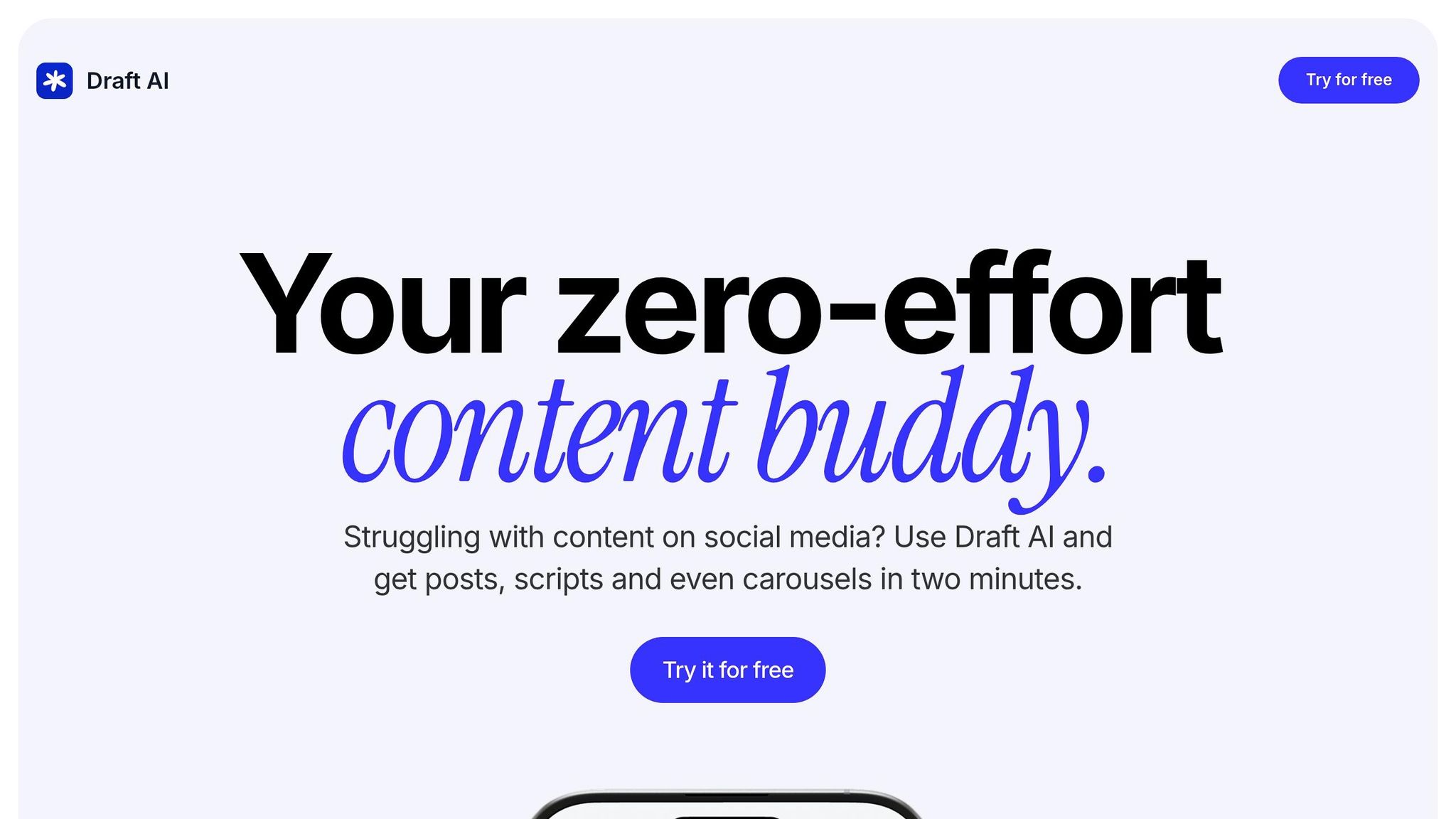
Draft AI takes the hassle out of multilingual content creation by combining speed, adaptability, and brand consistency into one platform. Whether you’re crafting text posts, carousels, Threads/X posts, or Instagram Reels scripts, the tool automatically adjusts formatting to suit text length in different languages - a big plus when working across diverse markets.
The Pro plan stands out with its custom style analysis feature. By analyzing your past posts and Reels, the AI learns your brand’s tone and applies it seamlessly across all languages. This ensures your brand voice stays consistent and authentic, whether you're posting in Portuguese, Japanese, or any other language. This capability makes it easier to connect with audiences globally while preserving the personality of your content.
Draft AI also slashes production time and costs. Instead of spending weeks and significant budgets on human translation, the platform enables you to adapt a single master piece into multiple languages in just days, cutting expenses by 50-70%. The inclusion of idea cards further streamlines the process, allowing you to save culturally relevant concepts and turn them into localized posts that resonate with specific audiences.
Free Plan vs. Pro Plan Comparison
Draft AI offers two tiers: Free and Pro. The choice depends on how much content you’re creating and how tailored you want your brand voice to be. Both plans include multilingual translation, but the Pro plan offers advanced features for businesses looking to scale their content efforts.
| Feature | Free Plan | Pro Plan ($15/month) |
|---|---|---|
| Content Generations | Limited (balance-based credits) | Unlimited |
| Multilingual Translation | ✓ All languages | ✓ All languages |
| Custom Style Analysis | ✗ | ✓ AI learns your writing style |
| Content Formats | Text posts only | Text posts, carousels, Threads/X posts, Reels scripts, hooks |
| Topic Creation | 3 topics maximum | Unlimited topics |
| Style Customization | ✗ | ✓ Reset and adjust writing guidelines |
| Voice-to-Content | ✓ Basic | ✓ Full access |
The Free plan is a good starting point for testing multilingual content or posting occasionally. It supports text posts for platforms like LinkedIn, Facebook, and Telegram, but its limited credits and three-topic cap may feel restrictive for frequent users.
The Pro plan, on the other hand, is ideal for businesses managing multiple language audiences or expanding internationally. With unlimited generations and advanced customization features, you can produce as much content as needed without worrying about running out of credits. At $15/month (or about $10/month with a yearly plan that includes a 7-day free trial), it’s a cost-effective solution for scaling your global content strategy while maintaining a consistent brand voice.
How to Build a Global Social Media Strategy That Works
Conclusion
Creating multilingual social media content doesn’t have to drain your budget or involve endless rounds of translation. By focusing on localization - like adjusting currency formats, tailoring humor, and considering regional color symbolism - you can genuinely connect with audiences in specific markets instead of just existing as a global brand.
Thanks to advancements in AI tools by 2026, production timelines have shrunk from weeks to just days. A hybrid approach works best: let AI handle the first draft, then have native speakers refine it for cultural nuances. This combination delivers both speed and accuracy. And it’s worth it - companies that invest in multilingual strategies see 1.5x higher customer retention rates, while most consumers prefer content in their native language.
Platforms like Draft AI simplify this process by integrating translation, brand voice, and formatting into a single tool. For just $15/month, you get unlimited content generation across all languages, breaking down barriers that often keep small businesses out of global markets. Features like custom style analysis ensure your brand sounds natural in any language - whether it’s Portuguese, Japanese, or something else - without coming across as robotic.
Start small by choosing one or two key languages based on market research, not guesswork. Stick to your brand style guide, use proper hreflang tags for SEO, and track performance metrics for each region. With the global content marketing industry hitting $600 billion by 2024 and 90% of marketers already embracing it, your competitors are likely expanding internationally. The real question isn’t whether you should create multilingual content - it’s how fast you can do it without compromising quality or overspending.
FAQs
How do I choose which languages to start with?
To kick things off, dive into understanding your target audience, the market potential, and how your content fits into their world. Pay attention to the languages spoken by your current or potential customers, especially in regions where engagement is strong.
Use audience demographic data to uncover growth opportunities. For instance, if you notice a large number of Spanish-speaking users engaging with your content in the U.S., it might make sense to prioritize Spanish as your first step.
Focus on languages that not only resonate with your audience but also match your team's ability to create and manage content effectively. This way, you can align your efforts with both audience preferences and your available resources.
When should I use AI translation vs. a native speaker?
AI translation shines when you need fast, large-scale translations or handling simple, straightforward content - especially when speed and cost are key factors. However, when it comes to capturing cultural nuances, idiomatic expressions, or humor that truly connects with a local audience, nothing beats the expertise of a native speaker.
Think of AI as a tool for efficiency - it’s great for creating initial drafts or tackling bulk tasks. But for polished, localized content that feels authentic and resonates deeply (like on social media), a native speaker’s touch is indispensable.
How do I keep my brand voice consistent across languages?
To keep your brand voice consistent across multiple languages, pay close attention to tone and style. Tools like Draft AI can help mirror your brand's voice while tailoring it to different markets. Creating a detailed style guide and working closely with native speakers or localization experts ensures that subtle nuances are retained. Make it a habit to review localized content frequently, so it stays aligned with your core messaging and feels genuine in every language.