AI-Driven Content Strategies for Trending Topics
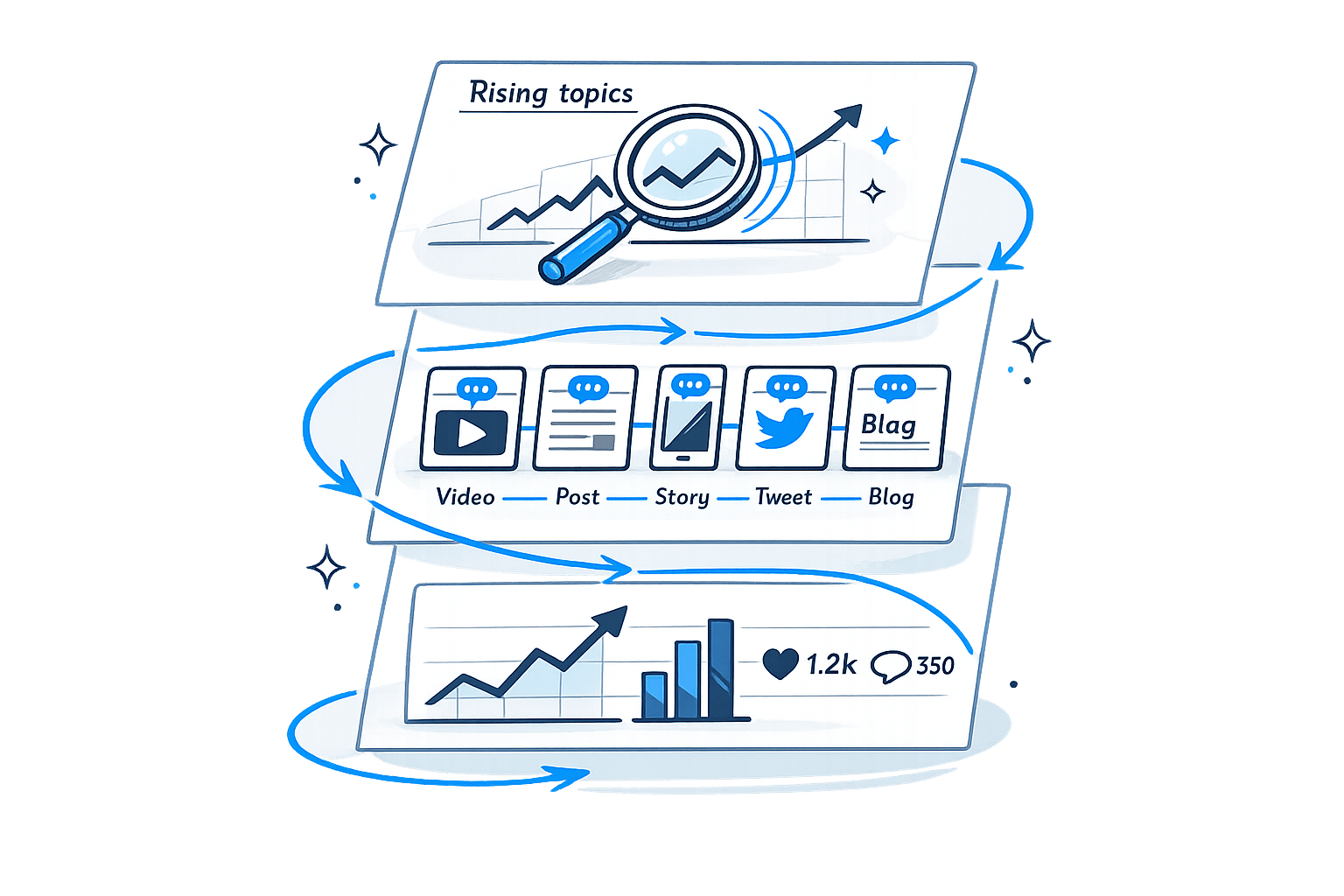
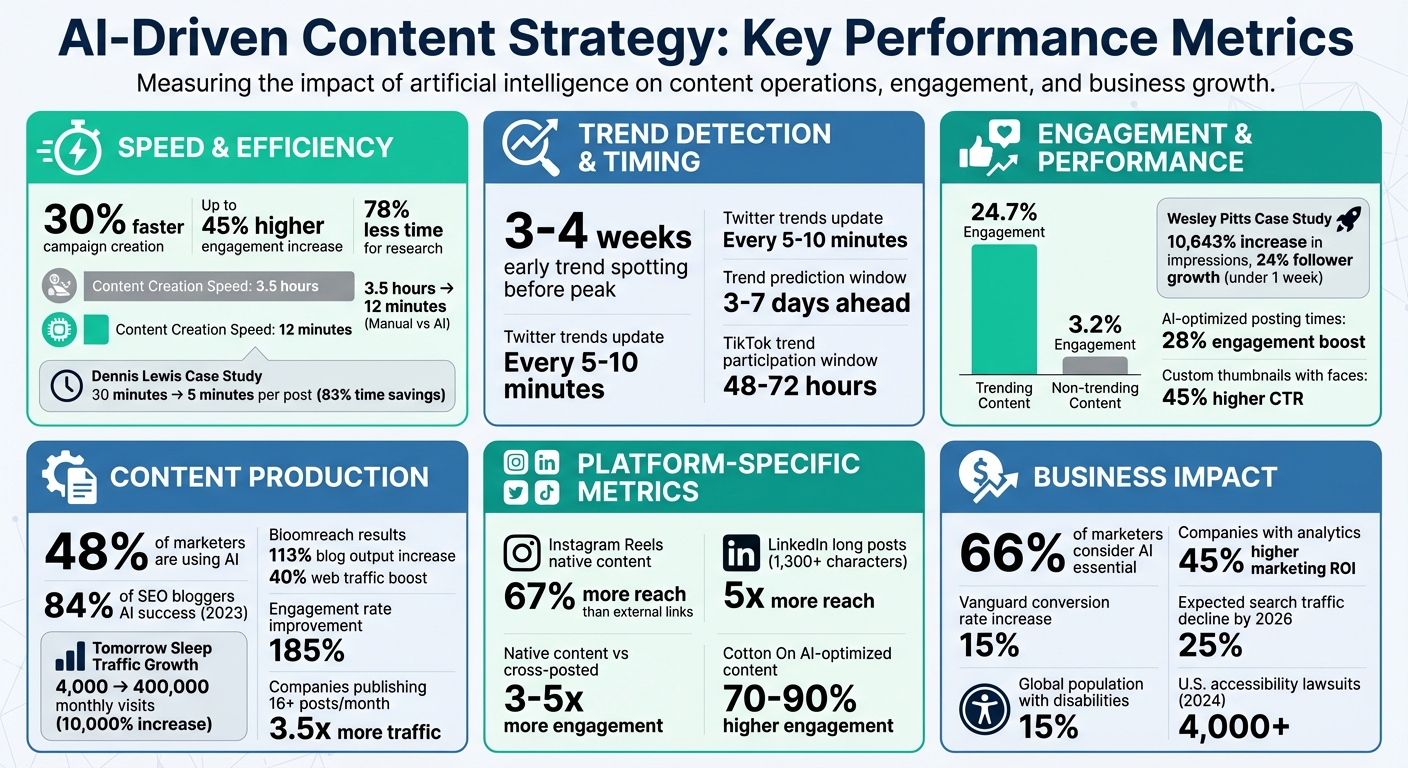
AI is transforming how we create content around trending topics. It identifies trends faster than humans, predicts their growth, and helps craft content tailored to your audience. Businesses using AI tools report creating campaigns 30% faster and achieving up to 45% higher engagement. Here's how AI helps:
- Spot trends early: AI scans platforms like Twitter, TikTok, and Google to identify emerging topics up to 3–4 weeks before they peak.
- Save time: AI reduces research and content creation time by up to 78%.
- Boost engagement: AI tools suggest high-performing formats, angles, and hooks for platforms like TikTok and LinkedIn.
- Tailor content: AI adapts content for specific platforms, ensuring it resonates with the target audience.
- Track performance: AI analytics highlight what works and what needs improvement in real time.
AI Content Creation Impact: Key Statistics and Performance Metrics
Finding and Tracking Trending Topics with AI
How AI Finds Trends in Real Time
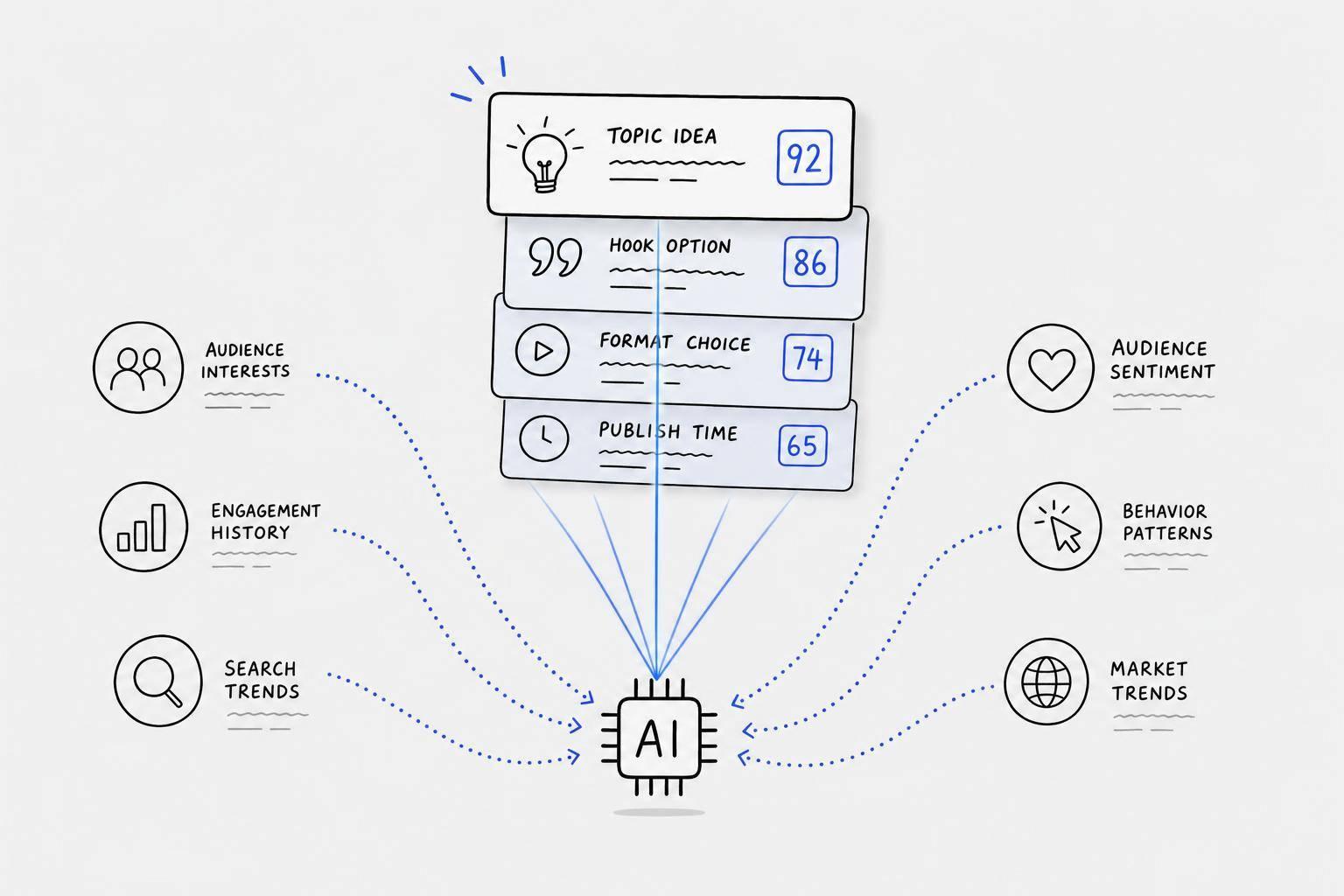
AI tools are constantly scanning a wide range of sources - think platforms like Twitter, TikTok, Reddit, LinkedIn, news websites, and search engines - 24/7. With the help of advanced Natural Language Processing, these tools can pick up on patterns and identify emerging topics well before they hit peak popularity. For example, Twitter trends update every 5–10 minutes. But AI doesn’t stop at spotting what's trending now; it can also predict how trends will evolve. It can flag topics that might gain traction 3–7 days ahead of time or even as far out as 3–4 weeks before they become mainstream.
Here’s the kicker: AI is fast. What might take you 3.5 hours of manual research can be done by AI in just 12 minutes. And the payoff is huge - content tied to trending topics sees engagement rates of about 24.7%, compared to just 3.2% for unrelated content. A real-world example? In June 2025, Wesley Pitts, Founder of KnoxBots and TerraSYNC, used AI to spot trending conversations. The result? A jaw-dropping 10,643% increase in post impressions and 24% follower growth in under a week. This kind of speed and precision allows you to focus on trends that truly matter.
Filtering Trends for Your Audience
AI doesn't just find trends - it helps you cut through the noise. You can set specific parameters, like focusing on "sustainable fashion" or "fintech", to filter out irrelevant chatter. By creating 3–5 audience personas for each platform, you can ensure the trends you follow match your audience’s interests.
Instead of chasing already "hot" topics, focus on "rising" queries - those with sudden spikes in search volume. These often signal the early stages of a trend. Geographic and language filters can further refine your search, ensuring you're tracking trends relevant to your target market. And if a topic is gaining traction across multiple platforms - like Reddit, LinkedIn, and major news outlets - it’s likely to have broad appeal.
AI also evaluates how saturated a trend is among competitors. If everyone’s already talking about it, you can use AI to find content gaps - unique angles or unanswered questions your brand can address. On LinkedIn, for example, longer posts (1,300+ characters) tend to perform better, achieving up to 5x more reach. Meanwhile, TikTok trends often have a short window of 48–72 hours for participation. Once you’ve filtered the trends, the right AI tools can help you turn those insights into automated content creation strategies.
AI Tools for Trend Monitoring
Once you’ve filtered the noise, AI tools make it easier to act on trends quickly. Platforms like Trendly AI offer predictive trend analysis with a 14-day free trial, while Exploding Topics highlights trends that are just starting to gain momentum. BuzzSumo focuses on the most shared content across social platforms, helping you uncover high-engagement themes.
For more in-depth data, Scrapeless extracts Google Search data, including related questions and forum discussions, to give you a fuller picture of a trend. Draft AI takes it a step further by helping you create ideas, article briefs, and outlines based on trending topics. For instance, Dennis Lewis, Co-Founder at Ratio.dev, used these tools to cut his content creation time from 30 minutes to just 5 minutes per post - a time savings of 83% - while still maintaining his brand’s voice.
To stay ahead, use strategic search terms like "2026", "latest", or "trending" to surface the most current data. You can also set up automated RSS feeds from niche blogs and connect them to AI summarizers for real-time updates. The aim isn’t just to find trends - it’s to spot the right ones before your competitors do.
sbb-itb-9f5fe42
How To Find Trending Topics With AI BEFORE Your Competition Does
AI Methods for Creating Trend-Based Content
AI has moved beyond simply tracking trends - it now transforms these insights into actionable content strategies that align with audience interests.
Using AI to Generate Content Ideas
AI tools excel at turning trending topics into targeted content ideas. By analyzing user intent and exploring how topics connect, these tools suggest angles, headlines, and outlines tailored to what people are actively searching for. In fact, 48% of marketers already rely on AI for content creation, and in 2023, 84% of SEO bloggers reported that AI and automation significantly improved their strategies.
The results speak for themselves. For example, Tomorrow Sleep used MarketMuse to identify trending topics and gaps in competitor content, skyrocketing their monthly website traffic from 4,000 to 400,000 - a staggering 10,000% increase. Similarly, Bloomreach, under the guidance of Carl Bleich, adopted Jasper to streamline content production, leading to a 113% increase in blog output and a 40% boost in web traffic.
AI-powered tools also make content planning faster and more efficient. They can cut research time by up to 78% while boosting engagement rates by 185%. Instead of spending hours brainstorming, marketers can use AI to validate ideas against existing successful content. Companies that publish 16 or more blog posts per month see traffic levels 3.5 times higher than those posting less frequently.
Once these ideas are refined, AI helps tailor content to fit platform-specific social media formats.
Adapting Content for Different Platforms
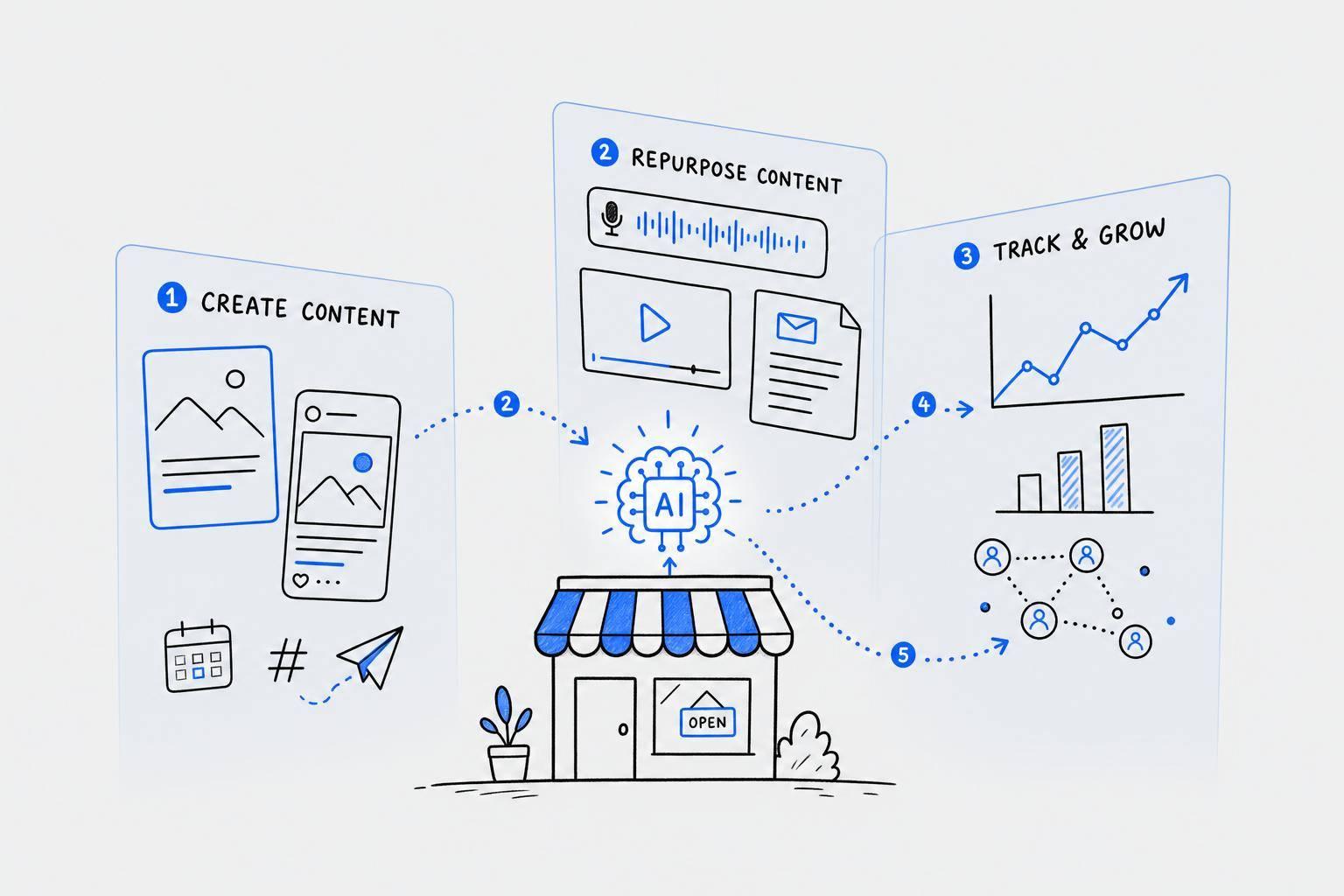
After identifying trending topics, AI can transform a single idea into platform-specific content. Social platforms in 2026 are increasingly favoring native content. For example, Instagram Reels achieve 67% more reach than posts with external links, and TikTok prioritizes videos uploaded directly to the platform. AI enables marketers to repurpose a single piece of content - like a 20-minute video - into 10 to 15 assets optimized for platforms like TikTok, LinkedIn, and Pinterest.
To get the best results, clear and specific AI prompts are essential. For instance, asking AI to "Write a bold opinion hook for X" works better than generic commands. On LinkedIn, posts longer than 1,300 characters achieve 5 times more reach than shorter updates. Similarly, TikTok content performs best when posted within 48–72 hours of a trend emerging. Native content consistently drives 3 to 5 times more engagement than cross-posted material. However, balancing AI-generated content with 60–70% human-created material remains critical to staying in favor with platform algorithms.
Using AI to Increase Engagement
Once the content is created and tailored, AI takes it a step further by predicting which elements will drive the most engagement. By analyzing data like engagement rates and visual trends, AI forecasts the performance of creative assets.
A great example comes from November 2025, when Cotton On, an Australian clothing brand, used Dash Social's AI tools during photoshoots. The AI provided real-time predictions for Instagram post performance, leading to engagement rates that were 70–90% higher than the brand's historical average.
AI also uses sentiment analysis to focus on content that generates positive engagement, helping brands refine their strategies. It identifies effective hooks - like "POV" scenarios or attention-grabbing phrases such as "Stop doing X" - and determines the ideal length for content to resonate with specific audiences. By analyzing real-time data from platforms like TikTok, Instagram, and YouTube, AI pinpoints what's going viral at any given moment. It's no surprise that 66% of marketers now consider AI essential to their success over the next year.
Using Draft AI to Create Trending Content Quickly
When it comes to jumping on trending topics, timing is everything. That’s where Draft AI comes in, turning raw ideas - whether typed or spoken - into polished, shareable content in just minutes. It’s all about speed and precision, giving you the edge to stay ahead of the curve.
Creating Trend-Based Content with Draft AI's Free Plan
Draft AI’s free plan is designed to help you create content fast, especially when trends are moving quickly. With its AI-powered content idea generator, you can take a single trending topic and spin it into multiple angles without spending a dime. Got ideas but no time to type? Just record your thoughts, and Draft AI will transcribe and structure them for you instantly. If you prefer to start with a framework, the outline assistant can whip up a structured article skeleton in seconds.
From headlines to social posts and meta descriptions, the free plan equips you with tools to craft content that’s ready for real-time trends. However, before hitting publish, always double-check details like dates, figures, and current news to ensure accuracy.
These features are just the starting point. For users seeking more advanced tools, the Pro plan takes things to the next level.
Advanced Features in Draft AI Pro Plan
While the free plan is great for basic needs, the Pro plan unlocks a range of features that let you produce content without limits. Priced at $15/month, it ensures you’re never held back by production delays. Whether it’s posts, carousels, or scripts, you can generate as much content as you need to stay competitive during trending moments.
One standout feature is the ability to replicate your brand’s unique tone with custom writing styles. This ensures your content feels consistent and authentic, which is essential for building trust. In fact, companies that excel at personalization see a 40% boost in revenue compared to those that don’t.
The Pro plan also includes unlimited revisions, multilingual translation, and advanced personalization tools. Multilingual translation is particularly useful for tapping into global trends - if a topic is trending in multiple countries, you can adapt your content for each audience without starting from scratch.
Another bonus? Access to a marketplace of vetted writers who can bring a human touch to AI-generated drafts.
"AI is a tool that can help content creators rather than replace them".
With these advanced tools, you’re not just creating content - you’re optimizing it for performance and tracking its success in real time. Draft AI Pro is designed to keep you ahead in the fast-paced world of trending content.
Customizing and Improving Trend-Based Content
Keeping Your Brand Voice in AI Content
When using AI to generate longer content, there's a risk it might stray from your brand's unique voice. To counter this, start by creating a brand voice profile. This involves uploading samples of your best-performing content - like your "About Us" page or top blog posts - so the AI can analyze your style, vocabulary, and tone.
You can further define your desired tone using scales (e.g., Funny vs. Serious, Formal vs. Casual) and assign ratings from 1 to 5. Additionally, develop "use/avoid" lists that highlight industry-specific terms to include and corporate jargon to avoid. For example, Vanguard leveraged the AI platform Persado to fine-tune its advertising language while adhering to strict financial regulations, leading to a 15% boost in conversion rates in 2025.
It’s also important to adapt your tone for different platforms. For instance, Instagram Reels - known to generate 67% more reach than external links as of 2026 - require a more visual and community-focused approach. On the other hand, LinkedIn posts exceeding 1,300 characters - which achieve 5x more reach than shorter updates - demand a tone of authority and thought leadership.
"With AirOps, we can precisely tune structure, tone, and keyword density so refreshed content not only ranks higher but also stays true to Apollo's voice".
Once your brand voice is set, refine your content by testing different variations to see what resonates best with your audience.
Testing and Improving AI Content
AI can help you create multiple variations of headlines, calls-to-action (CTAs), and hooks. Test these variations with your audience to see what performs best. To identify what works, make changes to one element at a time, so you can directly connect the adjustment to the results.
Track metrics like "correlation" and "lift" to measure how AI predictions align with actual engagement, and use this data to fine-tune your models. Always fact-check rigorously - AI tools sometimes generate inaccurate information, so double-check stats, quotes, and dates against reliable sources before publishing. Keep an eye on how often editors need to revise AI-generated content. Frequent edits may indicate that your prompts need tweaking. This cycle of testing and refining ensures your content stays relevant and high-quality, even as trends evolve.
Finally, make sure your content meets accessibility standards to engage the broadest possible audience.
Making Content Accessible to All Audiences
In 2024, over 4,000 digital accessibility lawsuits were filed in the U.S., highlighting that accessibility is no longer optional. AI can assist by generating alt text for images, but it’s essential to have a human review these descriptions to ensure they provide meaningful context.
"By providing an alternative text your content appears accessible, but unless it is meaningful, this risks superficial inclusivity without true accessibility".
Ensure AI-generated HTML uses proper semantic tags and heading hierarchies (H1, H2, H3) to improve screen reader navigation. In February 2025, Kontent.ai updated its platform to align with WCAG 2.1 Level AA standards, offering better keyboard navigation and automated image tagging. These updates aim to help organizations prepare for the European Accessibility Act deadline. AI summarization tools can also create "TL;DR" versions of long-form content, making it more digestible for users with cognitive impairments. This is particularly important, as roughly 15% of the global population lives with some form of disability.
Tracking Results and Improving Your AI Strategy
After using AI to speed up content creation, the next step is all about measuring how well it works and tweaking your approach for better outcomes.
Metrics for Measuring AI Content Success
Forget about surface-level metrics like follower counts. Instead, focus on indicators that highlight true content quality. For instance, save rates and share rates show that people find your content valuable enough to revisit or recommend. For videos or podcasts, completion rates - how many stick around until the end - are key. For written pieces, track scroll depth (aim for over 50% engagement) and average session duration.
When it comes to business results, conversion metrics take center stage. Keep an eye on conversions, lead quality scores, and customer acquisition costs to figure out which AI-generated pieces are boosting revenue. Companies that dive into structured content analytics often see a 45% bump in marketing ROI compared to those who don’t.
Each platform has its own rules for success:
- Instagram: Saves and shares are gold.
- TikTok: Completion and rewatch rates matter most.
- LinkedIn: Comments (especially in the first hour) and time-on-page drive visibility.
Here’s a real-world example: Tomorrow Sleep used MarketMuse to zero in on high-value topics and track performance. The result? A jump from 4,000 to 400,000 monthly website visits - a staggering 10,000% increase - and multiple Google featured snippets.
Once these metrics are in place, AI analytics can take things further by offering insights to refine your campaigns.
Using AI Analytics to Get Better Results
AI tools are great at spotting content that’s not performing as well as it could. For example, if a piece generates lots of engagement but low traffic, the issue might be with the title or thumbnail, not the content itself. Tools can also perform topic gap analysis, showing you high-volume keywords your competitors rank for. And if your traffic is slipping, content decay tracking helps you identify pages that need refreshing.
With traditional search engine traffic expected to drop by 25% by 2026 as AI chatbots handle more queries, it’s crucial to monitor how often your brand is mentioned in AI-generated answers. A good target? Appearing in 15–25% of relevant AI-generated responses in your niche.
Sentiment analysis powered by Natural Language Processing (NLP) can also help. It categorizes feedback - whether it’s praise, criticism, or confusion - so you can tweak your strategy accordingly. Even something as simple as using AI to optimize posting times can boost engagement by 28% compared to relying on guesswork.
These insights allow you to adapt your strategy in real time based on audience behavior.
Adjusting Strategy Based on Audience Response
Once you’ve gathered performance data and audience feedback, it’s time to fine-tune your approach. For instance, if analytics show readers dropping off early, adjust your AI prompts to improve clarity or make introductions more engaging. Use A/B testing to experiment with headlines, visuals, or calls to action - but only change one element at a time to pinpoint what works.
Dive deeper by segmenting your audience. Analyze how different groups - like tech-savvy users versus casual readers - interact with your content. Then, adjust the tone or technical details to match their preferences. Real-time dashboards can also alert you to problems, such as a spike in negative sentiment (above 20%) or a drop in engagement (below 30%), so you can act fast.
A great example of this in action is Vanguard. They used the AI platform Persado to craft personalized ad messages that complied with regulations, leading to a 15% boost in conversion rates.
"AI produces output, but performance data determines direction." – Analytify
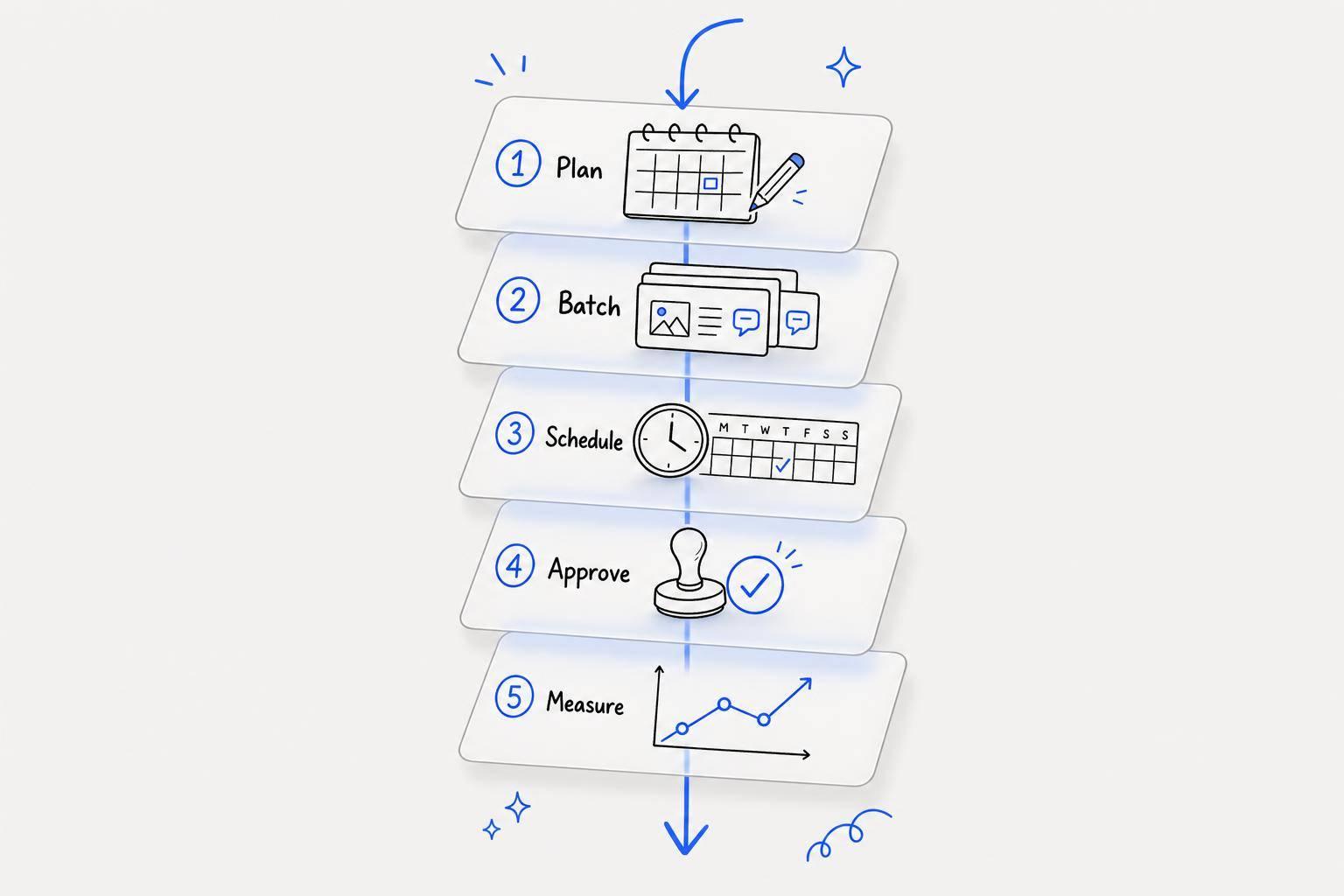
Finally, schedule quarterly reviews to identify which content themes are driving growth. Use these insights to shape your next quarter’s content calendar. Even small, data-driven tweaks - like using custom thumbnails with human faces - can make a big difference. For example, such thumbnails have been shown to increase click-through rates (CTR) by 45% compared to generic ones.
Conclusion and Key Takeaways
AI has transformed the content creation process, cutting down research time from weeks to just minutes. But the real power of AI lies not in replacing human creativity, but in complementing it. As John Thomas from Draft puts it, "Think of AI content creation like flying an airplane - autopilot does a lot of the work, but there's always a human in the cockpit making flight adjustments".
Businesses leveraging AI see impressive results, like launching campaigns 30% faster and boosting engagement by up to 45%. However, speed alone isn't enough. Success comes from combining AI's efficiency with human oversight. Tools like Draft AI can generate ideas, outlines, and first drafts in seconds, but it's up to humans to refine these drafts - adding the brand voice, verifying facts, and crafting emotional connections that resonate with audiences.
Draft AI simplifies this process with a step-by-step approach: use the AI-powered idea generator to brainstorm, the outline assistant to structure content, and the drafting tool to create an initial version. From there, fine-tune the content to reflect your unique brand identity. Their Free Plan allows users to test the platform with three topics, while Draft Pro ($15/month) offers unlimited content creation and deeper personalization options tailored to your brand.
The key takeaway? A balanced approach wins. Companies like Tomorrow Sleep, which grew its monthly visitors from 4,000 to 400,000, and Adobe, which added $10.8 million in revenue, show how blending AI efficiency with human creativity delivers exceptional results. Start small - pick one trending topic this week, use AI to generate variations, and refine them with your personal touch. AI speeds up content creation, but the final message is always a human decision.
"AI doesn't replace content strategy - it accelerates execution. Use AI to fill your calendar, but humans must decide what deserves space on it." - Distk Team
FAQs
How do I pick the right trend for my audience?
To pick the right trend, start by focusing on what matters to your audience. Dive into their world - browse forums, track conversations on social media, and pay attention to feedback they share. These are goldmines for understanding their preferences and interests.
You can also use AI tools to dig deeper. These tools are great for analyzing trends specific to certain regions or platforms, helping you ensure your content stays relevant. When evaluating trends, aim for those showing steady growth and high engagement rather than fleeting fads that burn out quickly.
By blending audience insights with AI-driven analysis, you'll be able to pinpoint topics that are timely, meaningful, and more likely to connect with your audience. This approach not only keeps your content engaging but also strengthens your connection with your audience.
How early should I publish content on a new trend?
To get the most out of a trend, timing is everything. Aim to publish your content as soon as a trend starts to gain traction - ideally within the first few hours. This early action increases your chances of riding the wave before it fizzles out.
Posting during high-activity periods, like weekday mornings between 9–11 AM or lunchtime from 12–1 PM, can also amplify your reach. Since trends can fade quickly, acting fast keeps your content relevant and boosts its potential to go viral.
How can I keep AI content in my brand voice?
To keep your brand voice intact when using AI-generated content, start by clearly outlining your style, tone, and personality. Offering writing samples and detailed guidelines for tone and style can help the AI better understand your brand's unique character. Use shared templates to maintain uniformity, and make it a habit to review the AI's outputs regularly. Consistent human oversight is key to ensuring the content feels genuine and stays true to your brand. This way, you can avoid any drift in voice and keep your messaging aligned with your identity.