Personalized Marketing with AI: Best Practices
AI-driven personalization is transforming marketing by tailoring experiences for individuals rather than broad groups. Here's what you need to know:
- What it is: AI uses customer data like browsing habits and purchase history to create unique recommendations, messages, and offers.
- Why it matters: Personalization increases revenue by 40%, boosts retention by 71%, and improves customer satisfaction. However, poor data quality causes 68% of projects to fail.
- Key data types: Behavioral, transactional, and zero-party data are essential for effective personalization.
- Privacy and compliance: With regulations like California's AB 2930 and the FTC's AI Disclosure Rule now in effect, brands must prioritize transparency and data governance.
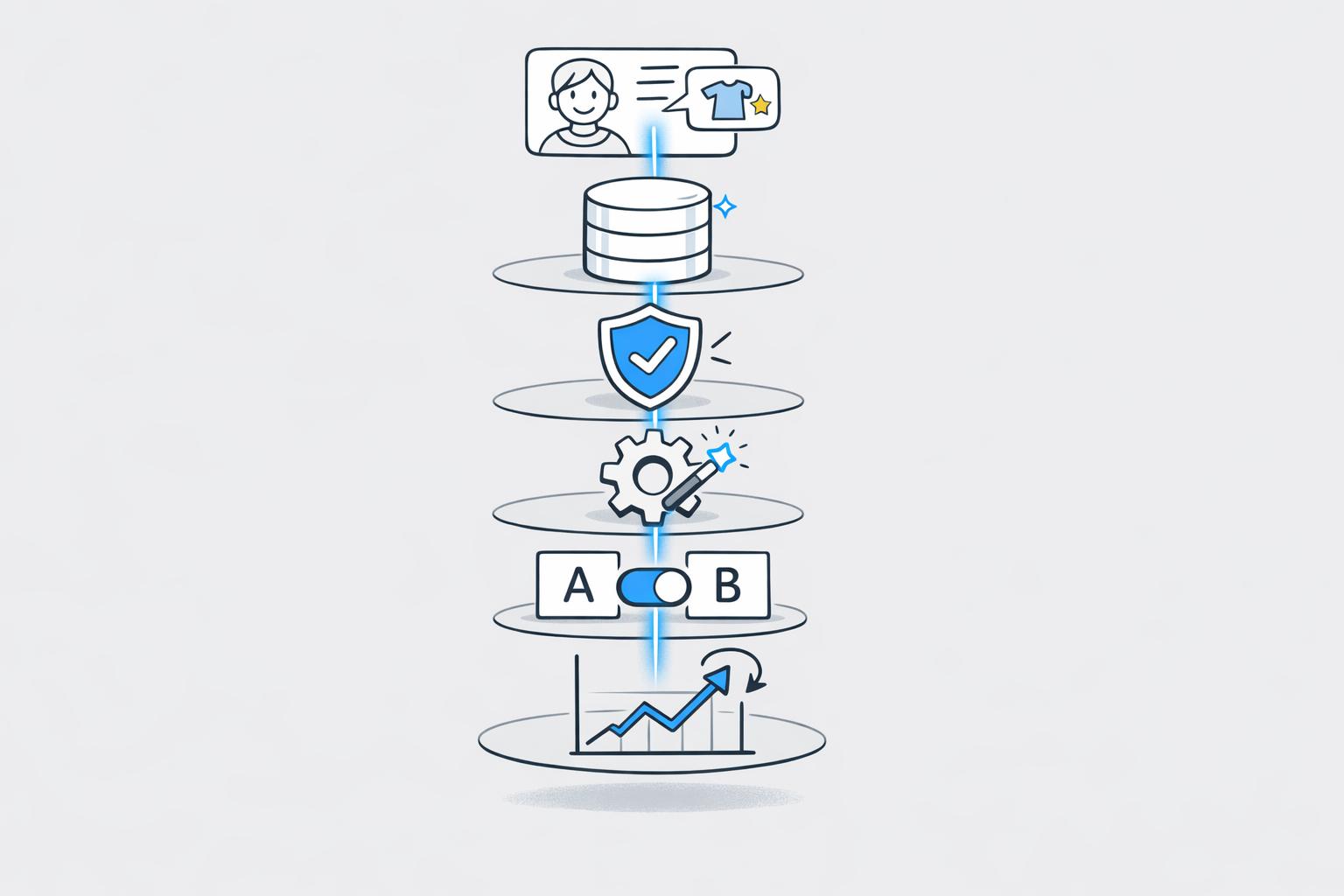
- Best practices: Start with clear goals, use tools that consolidate customer data, and continuously optimize campaigns through A/B testing.
AI-powered personalization isn't just about better marketing - it's about creating meaningful, timely interactions that meet customer expectations while respecting their privacy.
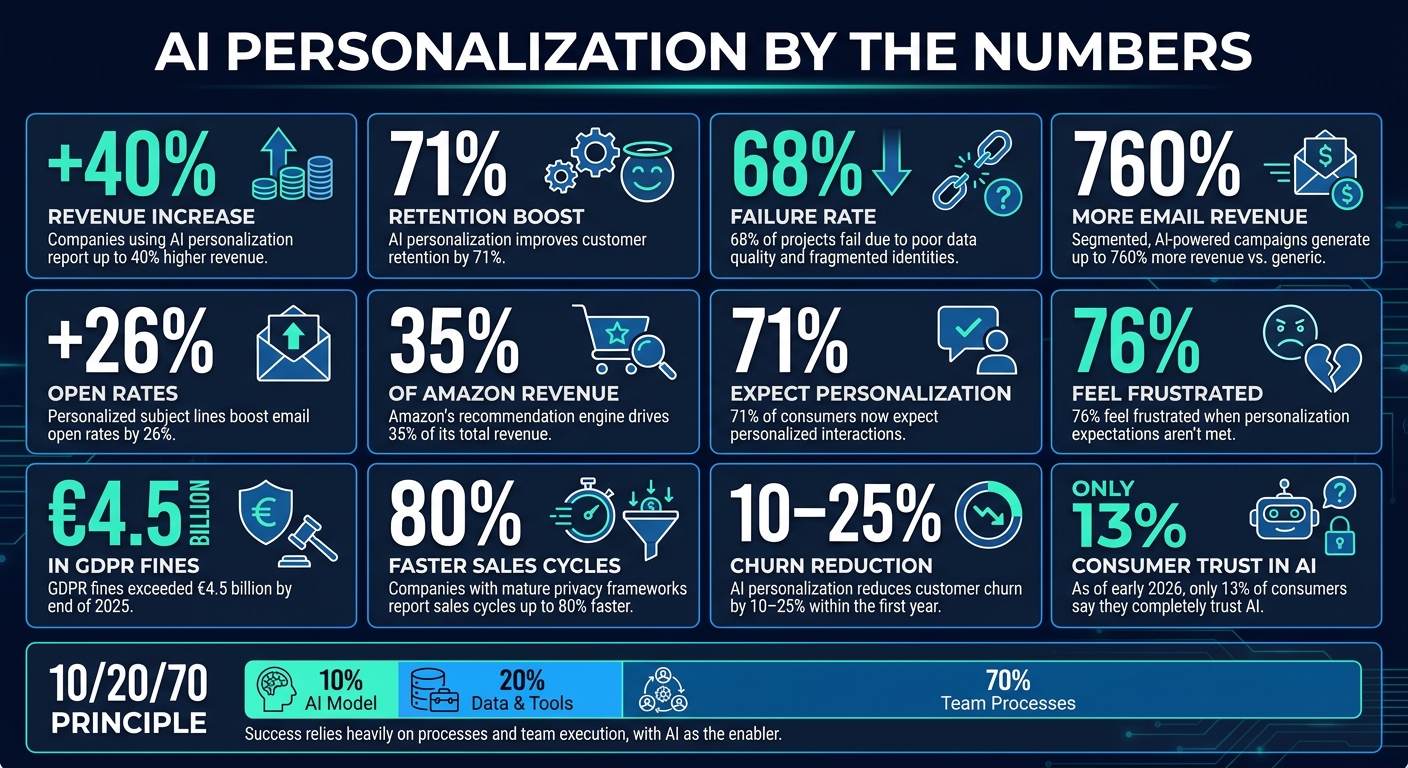
AI Personalization by the Numbers: Key Stats & Impact
Key Data Inputs for AI Personalization
Types of Data Used in AI Personalization
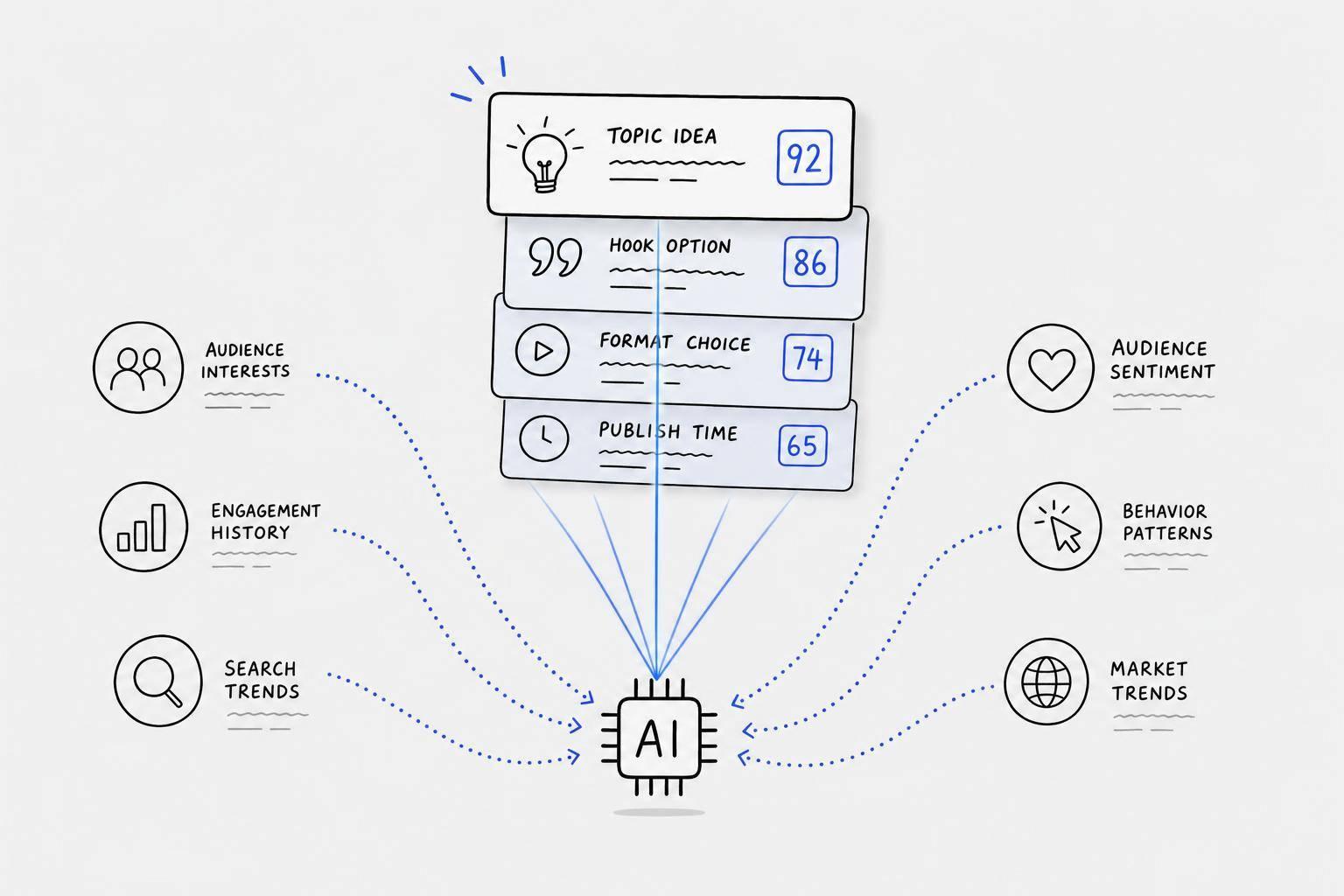
AI personalization thrives on the quality of the data it uses. In fact, 68% of personalization projects fail due to poor data quality and fragmented identities - not because of weak algorithms. This makes ensuring top-notch data quality even more critical than choosing the right tools.
Several key data types fuel effective personalization strategies:
- Behavioral data: This includes browsing habits, click patterns, scrolling depth, and the velocity of actions (how often someone interacts within a short time). It provides a snapshot of real-time customer behavior.
- Transactional data: Purchase history, average order values, price sensitivity, and cart abandonment trends reveal long-term customer patterns.
- Zero-party data: This refers to information customers willingly share, like quiz answers or preference selections. By 2026, this type of data has become a favorite because it offers explicit consent and direct insights into customer intent.
"83% of consumers are willing to share zero-party data if it leads to a truly personalized experience."
Another critical input is contextual/history data from CRM or support systems. For instance, knowing a customer is dealing with an unresolved issue prevents the awkward mistake of sending them a promotional upsell.
To bring all these data types together, a unified Customer Data Platform (CDP) is essential. It eliminates silos and enables a complete customer view. For example, men's grooming brand Every Man Jack used predictive analytics tied to individual purchase history to send personalized reorder emails based on predicted next-order dates. This approach drove a 25% year-over-year increase in flow revenue.
Bringing these diverse data sources together is the foundation for successful AI-driven personalization.
Data Privacy and Governance Best Practices
Collecting rich customer data comes with serious legal and ethical responsibilities. By the end of 2025, GDPR fines had exceeded €4.5 billion. In the U.S., new regulations like California's AB 2930 (effective January 2026) require businesses to let consumers opt out of automated decision-making for pricing or product recommendations. Similarly, the FTC's AI Disclosure Rule (effective March 2026) mandates clear disclosure of AI-driven pricing or recommendations at the point of sale. These laws not only protect consumers but also encourage operational improvements.
Strong privacy practices can also boost business performance. Companies with mature privacy frameworks report sales cycles up to 80% faster than those with weaker policies. Real-time consent management is a practical way to enhance AI's personalization capabilities. For example, syncing a user's opt-out preferences instantly across systems can prevent them from receiving AI-generated emails. In Q4 2025, e-commerce brand Outer adopted a consent-first architecture using Segment, Bloomreach, and Rebuy, which led to a 22% increase in personalization revenue.
"The brands that get caught flat-footed aren't the ones ignoring AI - they're the ones who deployed it fast and assumed compliance would sort itself out later. That's not how 2026 works." - Sarah Engel, Chief Marketing Officer, January Digital
Adopting data minimization - collecting only the data needed for a specific purpose - is another smart move. Combine this with progressive profiling, where you ask one key question per visit instead of overwhelming users with lengthy forms. This approach builds a meaningful zero-party data profile while keeping the user experience smooth. Maintaining high data quality through strong governance practices is essential for delivering accurate and effective personalization.
sbb-itb-9f5fe42
Best Practices for Using AI in Personalized Marketing
Setting Clear Goals for AI Personalization
Before diving into AI-driven personalization, it's crucial to set specific, measurable goals. Broad objectives like "boost engagement" won't cut it. Instead, align your goals with distinct stages of the customer journey to track meaningful progress.
| Funnel Stage | Primary AI Goal | Key Metrics |
|---|---|---|
| Awareness | Content Relevance | Click-through rate (CTR), time-on-site, scroll depth |
| Interest | Intent Identification | Lead magnet downloads, ROI calculator usage |
| Acquisition | Conversion Optimization | Sign-up rate, conversion lift vs. control group |
| Retention | Churn Prevention | Churn rate, Customer Lifetime Value (CLV) |
| Operations | Creative Efficiency | Campaign creation time, content variants produced |
To measure success accurately, use holdout groups to compare the performance of AI-personalized content against generic messaging. This method isolates the impact of personalization efforts and provides clear insights into what works.
Start with high-impact opportunities, such as targeting users with abandoned carts or revisits. These scenarios often yield quick and measurable results. Additionally, track internal efficiency - like how much time your team saves when creating multiple campaign variations. Sometimes, operational improvements are just as valuable as customer-facing metrics.
By tying your objectives to measurable outcomes, you can align AI efforts with both customer expectations and business goals. Once these are in place, the next step is selecting tools that can deliver on those objectives.
Choosing the Right AI Tools
With your goals clearly defined, the focus shifts to picking the right AI tools. Look for platforms that consolidate your data into a unified customer profile. This ensures your messaging is timely and relevant. Real-time processing is especially important; tools relying on outdated batch updates won’t keep pace with fast-changing customer behaviors.
Opt for tools equipped with generative AI capabilities to create diverse content for micro-segments quickly. For instance, platforms like Draft AI can generate social media posts, carousels, and scripts from raw data or even a voice message. It adapts its tone to match your brand, while its content idea generator helps brainstorm hooks for future campaigns.
Transparency is equally important. Avoid tools that operate as black boxes, where the decision-making process is unclear. If you don’t know why a system recommends a specific action, managing brand safety and compliance becomes a challenge.
Monitoring and Optimizing Campaigns
Once you’ve selected the right tools, the work doesn’t stop there - ongoing optimization is key. Regular A/B testing should be a cornerstone of your strategy. Compare AI-driven campaigns against non-personalized control groups to ensure your efforts are delivering results.
Combine quantitative data (like open rates, revenue per recipient, and conversion lift) with qualitative insights (customer feedback and opt-out rates). For example, a sudden increase in opt-outs might indicate your messaging feels intrusive, signaling the need to adjust frequency caps or tone.
Create a feedback loop to refine your AI models continuously. By incorporating real-world performance data, your personalization efforts can stay aligned with evolving customer behaviors, ensuring your campaigns remain effective over time.
AI in Marketing: Personalization and Predictive Analysis
Use Cases for AI-Driven Personalization
AI personalization has transformed how businesses interact with their audiences, delivering measurable results across multiple channels.
Tailored Email Campaigns
Email marketing is one of the most effective areas for AI-driven personalization. Instead of sending the same generic email to everyone, AI uses behavioral data - like browsing habits, purchase history, and engagement timing - to craft emails uniquely tailored to each recipient. This can include everything from the subject line to product recommendations and images.
The stats speak for themselves. Segmented, AI-powered email campaigns can generate up to 760% more revenue compared to generic emails. Even something as simple as personalized subject lines can boost open rates by 26%. For example, eBay used Phrasee’s AI-powered subject line system and saw a 15.8% increase in open rates and a 31% lift in clicks across their campaigns.
High-intent automation is a great starting point. Take Willful, a SaaS company, as an example: they re-engaged users who dropped off at key moments, creating email flows that now account for 40% of their revenue and convert 18 times better than generic emails. These results come from targeting the right moment, not just the right person.
"Traditional email automation was about drawing boxes and arrows; autonomous marketing is about setting goals and letting AI figure out the next best move." - Jackie Palmer, VP Product Marketing, ActiveCampaign
If you're just getting started, focus on flows like abandoned cart recovery, welcome sequences, or post-purchase follow-ups. These are high-intent scenarios where AI optimization can quickly prove its value.
AI-driven personalization doesn’t stop at emails - it can also transform how websites engage with visitors in real time.
Dynamic Website Personalization
Your website doesn’t have to offer a one-size-fits-all experience. AI can adjust headlines, product suggestions, and even entire sections of content in real time based on who’s visiting and their behavior.
For B2B companies, de-anonymization is a game-changer. AI can identify the company behind an anonymous IP address and instantly tailor homepage content to match their industry. For instance, a logistics firm visitor might see a headline like “Solutions for Supply Chain Leaders” instead of a generic message. This kind of relevance can lower bounce rates before visitors even begin scrolling.
Amazon’s recommendation engine is a well-known example of AI personalization at scale, contributing to 35% of its total revenue. But smaller brands are finding success too. Thirdlove implemented a personalized "For You" hub with custom product recommendations and loyalty tracking, generating over $200,000 in additional revenue in 2025.
"Personalization is no longer a 'nice to have.' It reduces decision fatigue, speeds up evaluation, and makes experiences feel helpful and attentive." - Dashly
To make this work, a unified Customer Data Platform (CDP) ensures high-quality data management and privacy compliance, both of which are essential for real-time personalization.
AI is also reshaping social media strategies by making it easier to customize content for different audiences.
Social Media Content Personalization
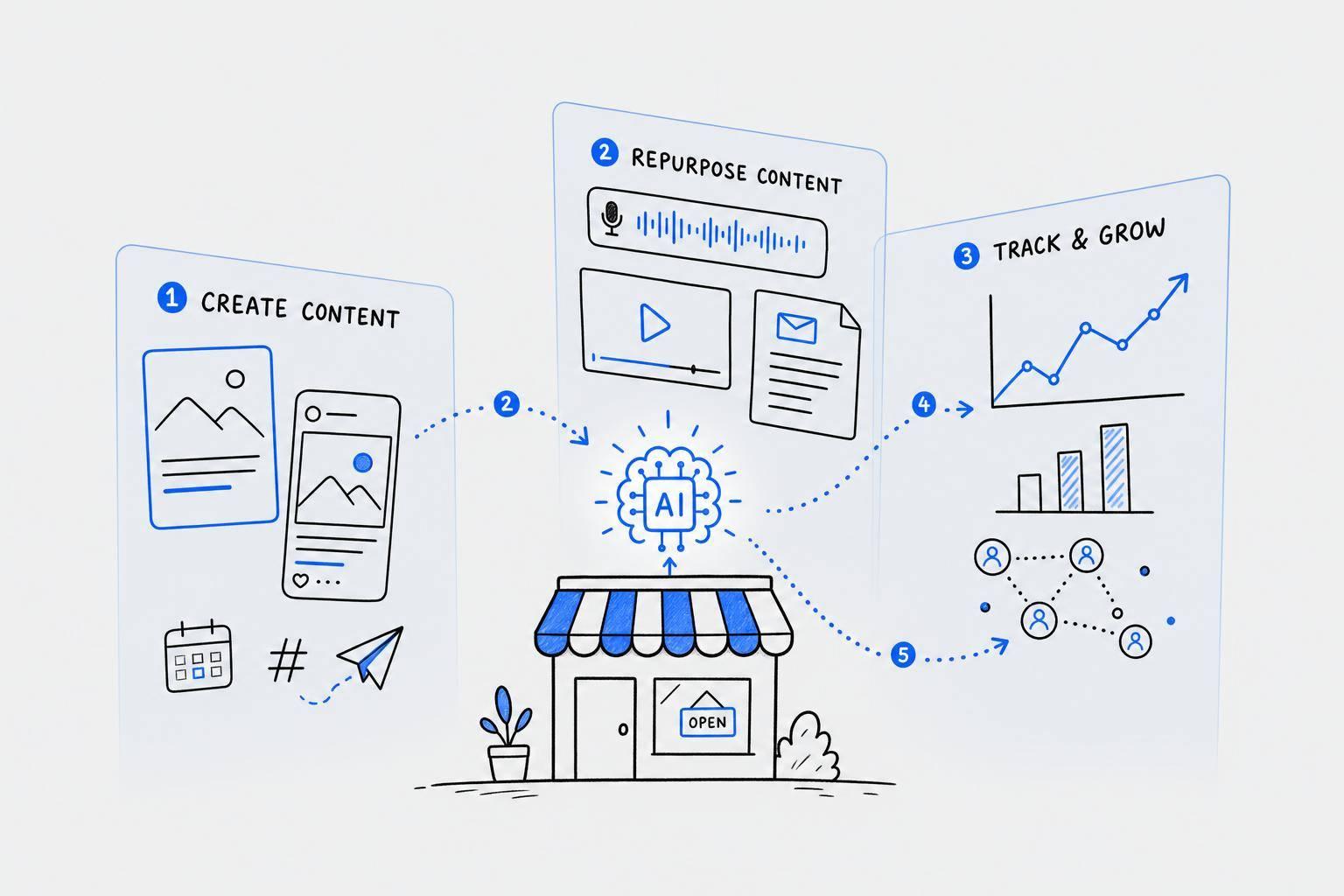
Customizing social media content used to require a lot of manual effort. AI has changed that by enabling businesses to take one core idea and adapt it into multiple formats - each tailored to specific audience segments. This includes adjusting tone, style, and format quickly and efficiently.
Tools like Draft AI make this process seamless. You can input your business details or even a voice message, and it generates a variety of content ideas - from posts to carousels to scripts. Its "Copy Your Style" feature analyzes your existing posts to ensure the output matches your brand’s tone and doesn’t feel generic. For teams juggling multiple platforms, it supports Instagram, LinkedIn, Threads, and more, with built-in multilingual translation tools.
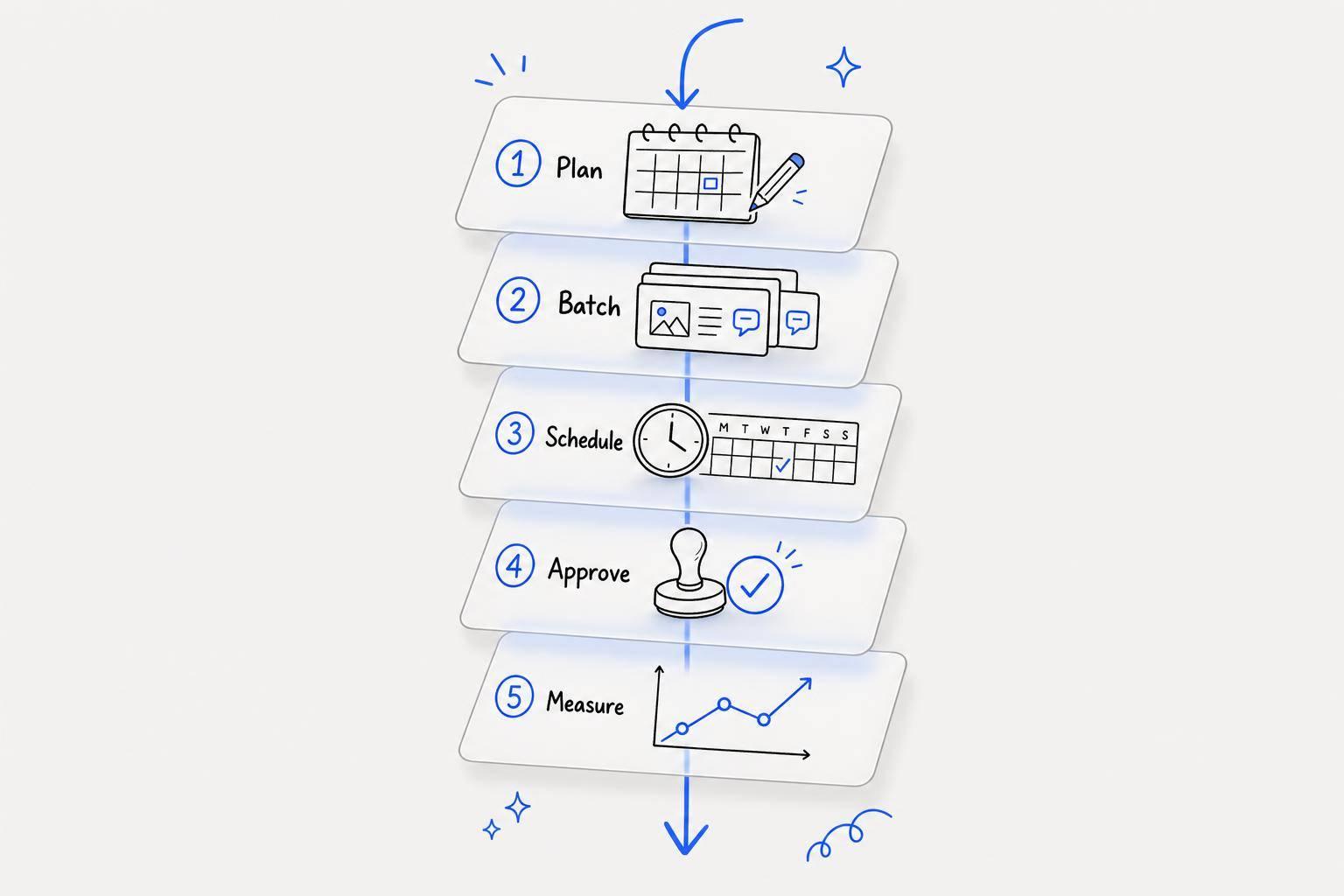
AI can also optimize posting schedules. For accounts with at least 90 days of post history, using AI-recommended posting times can boost organic reach by 15–25%. Combine this with a consistent content calendar - batching a week’s worth of posts in just 30 minutes - and social media becomes less of a daily grind.
"The businesses that win at social media in 2026 won't be the ones with the most posts. They'll be the ones who figured out how to stay consistently relevant to their actual audience - without losing their minds in the process." - Kavitha, Growth at Omnify
Risks and Ethical Considerations
AI personalization can deliver impressive results, but it’s not without risks. If these risks aren’t addressed, they can harm your brand’s reputation - and even its legal standing.
Avoiding Bias in AI Models
Creating ethical AI models goes beyond gathering quality data; it also requires tackling bias head-on. When training data is skewed, AI systems may unintentionally exclude certain groups from seeing relevant offers or opportunities. Discriminatory practices based on factors like race, gender, or age could even lead to regulatory issues, especially under laws such as California's AB 2930, which took effect in January 2026.
The “black-box” nature of many AI systems adds another challenge. These systems often can’t explain why they target one customer over another, making it tough to audit for bias after the fact. To navigate this, opt for platforms that include explainability features and commit to regular audits - tools like IBM’s AI Fairness 360 or Microsoft’s Fairlearn can help identify bias across different demographic groups. Another practical step? Implementing a diversity floor of 10–20% in recommendation engines to avoid filter bubbles, where users are only shown content that reinforces existing preferences.
Addressing bias isn’t just an ethical obligation; it’s a core part of building a successful AI personalization strategy.
"Jumping to hyper-personalization before your data foundation is solid is like trying to bake a soufflé in a broken oven. The recipe isn't the problem." - FourFoldAI Research Team
Balancing Personalization with Privacy
While ethical AI requires bias management, maintaining consumer trust means prioritizing privacy. Although 71% of consumers want personalized experiences, 70% are concerned about how their data is used. As of early 2026, only 13% of consumers say they completely trust AI. This gap between demand and trust is where brands can either win loyalty or lose it.
The best way forward? Data minimization - only collecting what’s absolutely necessary. For example, if a user is searching for a nearby store, requesting their location makes sense, but tracking their browsing history across unrelated websites doesn’t. Providing clear, granular consent options for things like behavioral advertising and AI-driven recommendations - rather than a blanket “Accept All” button - can also go a long way.
Transparency is no longer just a nice-to-have; it’s a requirement. The FTC’s AI Disclosure Rule, effective as of March 2026, mandates clear labeling of AI-generated recommendations at the point of interaction. For instance, labels like “Recommended by AI” or “Personalized for you” should be prominently displayed alongside the content, not buried in a privacy policy. Interestingly, this approach can actually drive conversions.
"The disclosure requirement is actually a conversion opportunity if you frame it right. Brands that lean into 'this recommendation was built for you' see engagement lift." - Nik Sharma, founder, Sharma Brands
The brands that excel treat privacy as a feature, not just a compliance box to check. With 92% of consumers saying they trust brands that clearly explain how their data is used, transparency isn’t just ethical - it’s a competitive edge. By building trust through clear and ethical practices, brands set the stage for stronger performance tracking down the line.
Measuring the Success of AI Personalization
Key Metrics to Track
To measure the success of AI personalization, focus on metrics that directly connect to your business goals. These can be grouped into four main categories: conversion, retention, engagement, and operational efficiency. Each offers a different perspective on how well your personalization efforts are working.
| Metric Category | Key KPIs | What It Tells You |
|---|---|---|
| Conversion | Conversion rate lift, AOV (average order value), revenue per user | Shows the impact on revenue growth |
| Retention | Churn rate, CLTV (customer lifetime value), repeat purchase rate | Highlights long-term customer loyalty |
| Engagement | CTR (click-through rate), session depth, recommendation acceptance rate | Measures how relevant and engaging your content feels |
| Efficiency | Ticket deflection rate, CAC (customer acquisition cost), cost-to-serve | Reflects operational cost savings driven by AI |
These metrics are essential for validating the goals you’ve set and for driving continuous improvement. For example, companies using AI personalization have reported up to 40% higher revenue, and it has also been shown to reduce customer churn by 10–25% within the first year.
A particularly insightful metric is the recommendation acceptance rate, which tracks how often customers interact with AI-generated suggestions. If this rate is low, it may indicate that your model needs retraining, even if other metrics like conversion rates seem fine. These measurements establish a baseline to guide further refinement, enhanced by targeted experiments.
Using Results to Improve Your Strategy
Once you’ve tracked these metrics, the next step is turning insights into action. Data becomes impactful only when it informs strategic decisions. One of the most reliable ways to measure the effectiveness of personalization is through A/B testing with holdout groups. This involves comparing personalized experiences with a control group that doesn’t receive them. Maintaining a consistent holdout group (about 5–10% of your audience) allows you to benchmark performance over time.
For instance, in April 2026, Adidas saw a 259% increase in average order value thanks to AI-powered recommendations. Similarly, Half Magic, a beauty brand, achieved 110% year-over-year revenue growth between 2025 and 2026 by leveraging RFM (recency, frequency, monetary value) analysis to deliver perfectly timed loyalty messages.
"Personalization value is created at the point of delivery, not at the point of data collection." - Lindsay Gomega, AI-Powered Personalization Marketing Guide
To ensure comprehensive tracking, adopt a three-layer KPI framework that monitors experience, engagement, and economic outcomes. Use leading indicators like session depth for quick feedback during experiments, while relying on primary metrics like revenue and retention to gauge long-term success. If you notice gaps - such as high engagement but low conversion - it’s a signal to adjust factors like the offer, timing, or audience segment, rather than focusing solely on the algorithm.
Conclusion and Key Takeaways
Final Thoughts on AI Personalization
AI-powered personalization has become essential, not optional. Consider this: 71% of consumers now expect personalized interactions, and 76% feel frustrated when those expectations aren't met. Failing to tailor experiences doesn’t just disappoint customers - it directly impacts engagement and revenue.
Brands that have made personalization work for them - like Maya, which achieved 95% year-over-year growth in its credit base by automating lifecycle communication, or ZEE5, which saw a 60% increase in click-through rates using AI for send-time optimization - didn't achieve these results by accident. They started small, built a strong data foundation, and scaled their efforts strategically.
"The goal of AI personalization is not more segments - it is a segment size of one." - Alice Labs
This sentiment perfectly sums it up: success lies in delivering relevance at an individual level, not in creating overly complex segmentation models. Tools like Draft AI help bridge the gap by enabling the creation of content variants at scale, tailored to specific audiences, channels, and contexts. This eliminates one of the major hurdles between having a solid AI strategy and executing it effectively.
These lessons pave the way for actionable steps that can help you apply these principles in your own strategy.
Next Steps to Get Started
To harness the full potential of AI-driven personalization, it's crucial to take a structured approach. Start with a solid data foundation and align your strategy with operational execution. Here's a step-by-step plan to consider:
- Audit your data: Ensure critical fields like purchase history and behavioral signals are at least 70% complete to maximize AI performance.
- Focus on high-impact moments: Target key opportunities, such as abandoned cart recovery or onboarding sequences.
- Leverage AI for content creation: Use templates with dynamic sections and let AI generate tailored variants.
- Test and measure: Run A/B tests against static control groups to measure performance improvements before scaling your efforts.
Keep in mind the 10/20/70 principle: 10% of success comes from the AI model itself, 20% from your data and tools, and 70% from your team’s processes - this includes clear goals, governance, and disciplined testing. The technology is ready, but the real question is whether your team has the structure and commitment to make it work.
FAQs
What data do I need to start AI personalization?
To kick off AI personalization, the first step is creating a unified and accurate customer profile. This can be done using tools like a Customer Data Platform (CDP) or Customer Relationship Management (CRM) system. Focus on collecting three main types of data:
- Identity data: Basic details like demographics and contact information.
- Zero-party data: Preferences and insights customers willingly share with you.
- Behavioral data: Information from actions like clicks, purchases, and browsing habits.
Don't forget the importance of data hygiene. Clean up your data by eliminating duplicates and standardizing terms. This ensures your AI works with consistent, trustworthy customer insights.
How can I personalize while staying compliant in the U.S.?
To ensure personalization aligns with U.S. regulations, focus on gathering zero-party and first-party data directly from customers with their explicit consent. Move away from third-party cookies by adopting transparent value-exchange models that make it clear to customers what they’re getting in return for their data. Implement a Consent Management Platform (CMP) to provide easy opt-in/opt-out options and maintain a detailed audit trail for compliance.
Additionally, clearly label any AI-generated content (e.g., "Recommended by AI") to adhere to FTC guidelines. Keep consent records securely stored for at least 24 months to remain compliant with data retention requirements.
How can I prove AI personalization is working?
To show how well AI personalization works, try using A/B testing alongside analytics. Compare results from personalized content against control groups to see the difference. Focus on key metrics like conversion rates, customer lifetime value, and churn reduction. Keep an eye on engagement metrics too, such as click-through rates and email open rates. Just make sure your data tracking is precise - accurate insights depend on clean, reliable data.