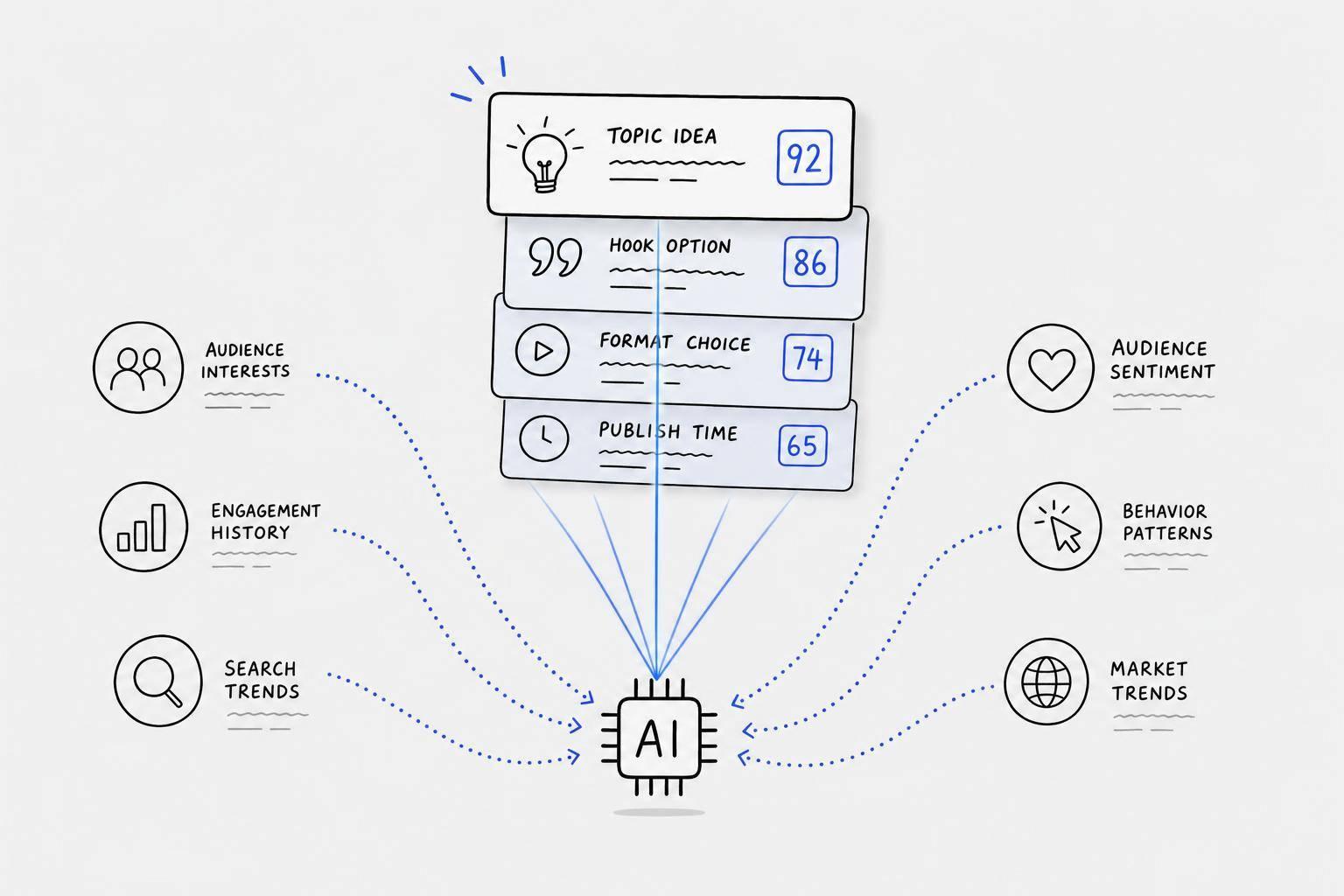
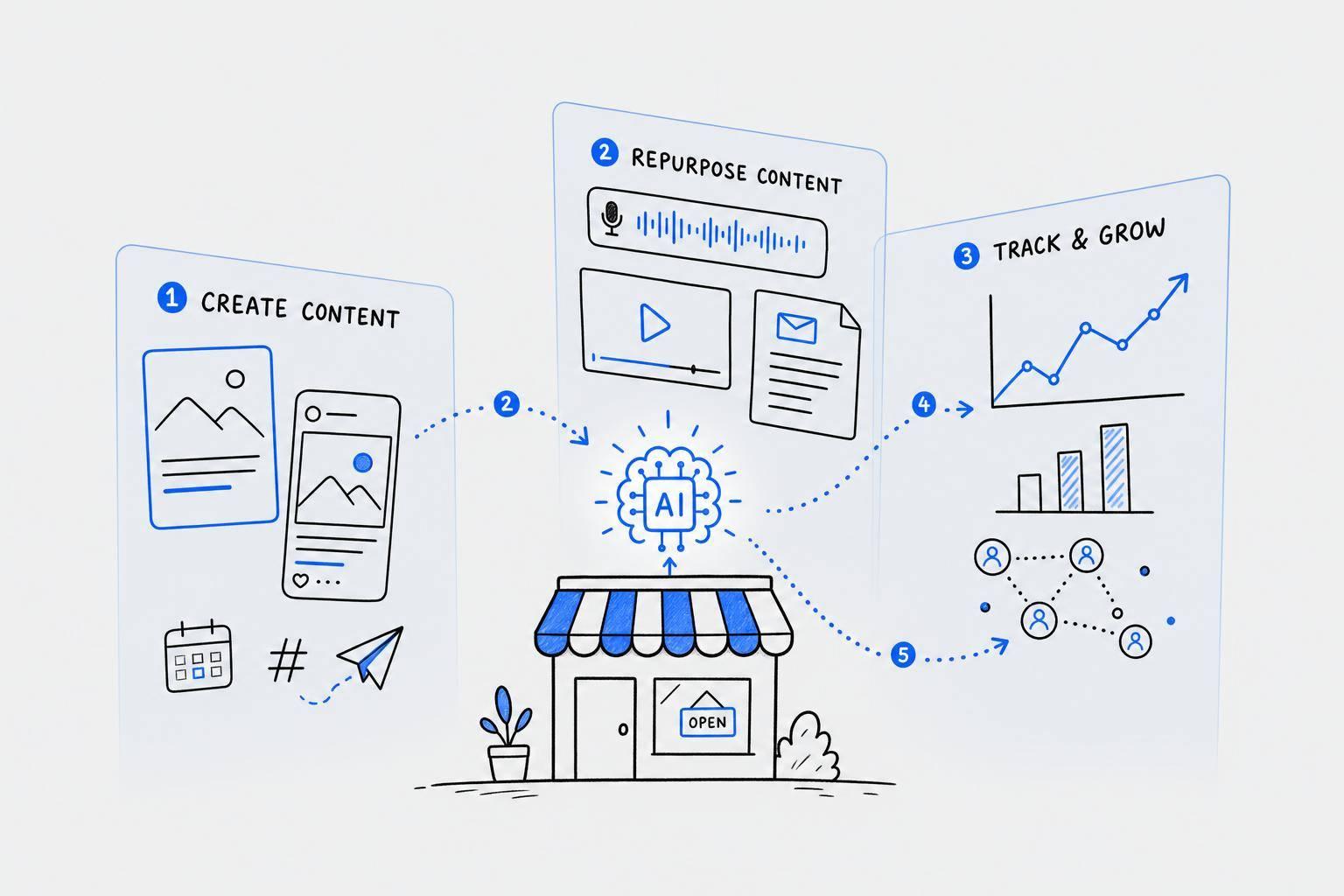
How AI Content Boosts Trust Online
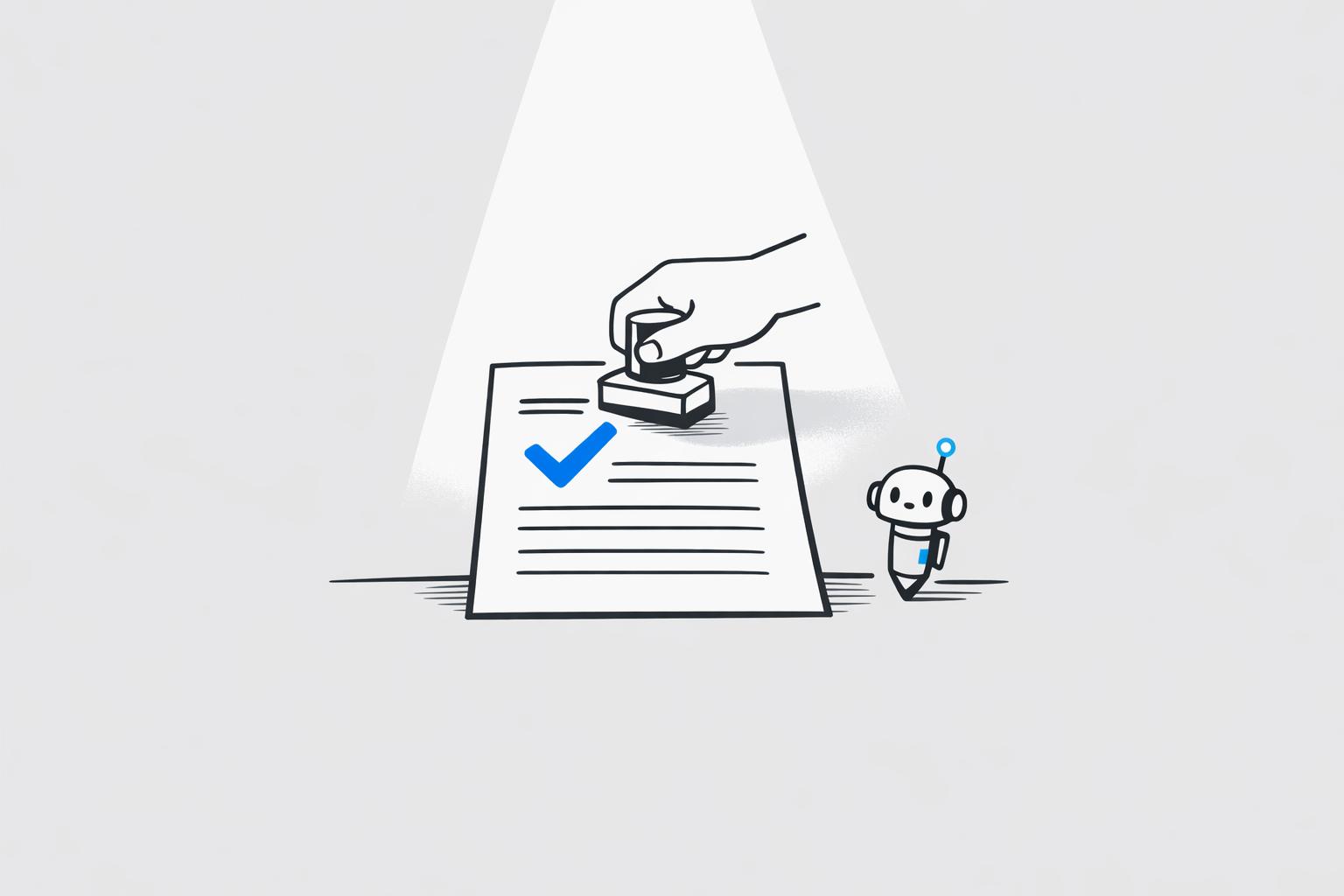
- Transparency matters: Clearly labeling AI-generated content increases reader trust by 15%, as seen in experiments by The Washington Post.
- Human oversight is critical: Companies like Vanguard achieved a 15% boost in conversions by blending AI tools with human review.
- Trust impacts business performance: Over half of consumers (52%) disengage from content they suspect is AI-generated, while ads near such content are seen as less reliable.
- Consistency builds credibility: AI tools like Draft AI help maintain a consistent tone and style across platforms, which is crucial for audience trust.
- Quality over quantity: Over-reliance on AI for mass content, as in TailRide's case, can harm SEO and brand reputation.
AI tools can streamline content creation, but trust hinges on transparency, human involvement, and delivering meaningful, well-reviewed content.
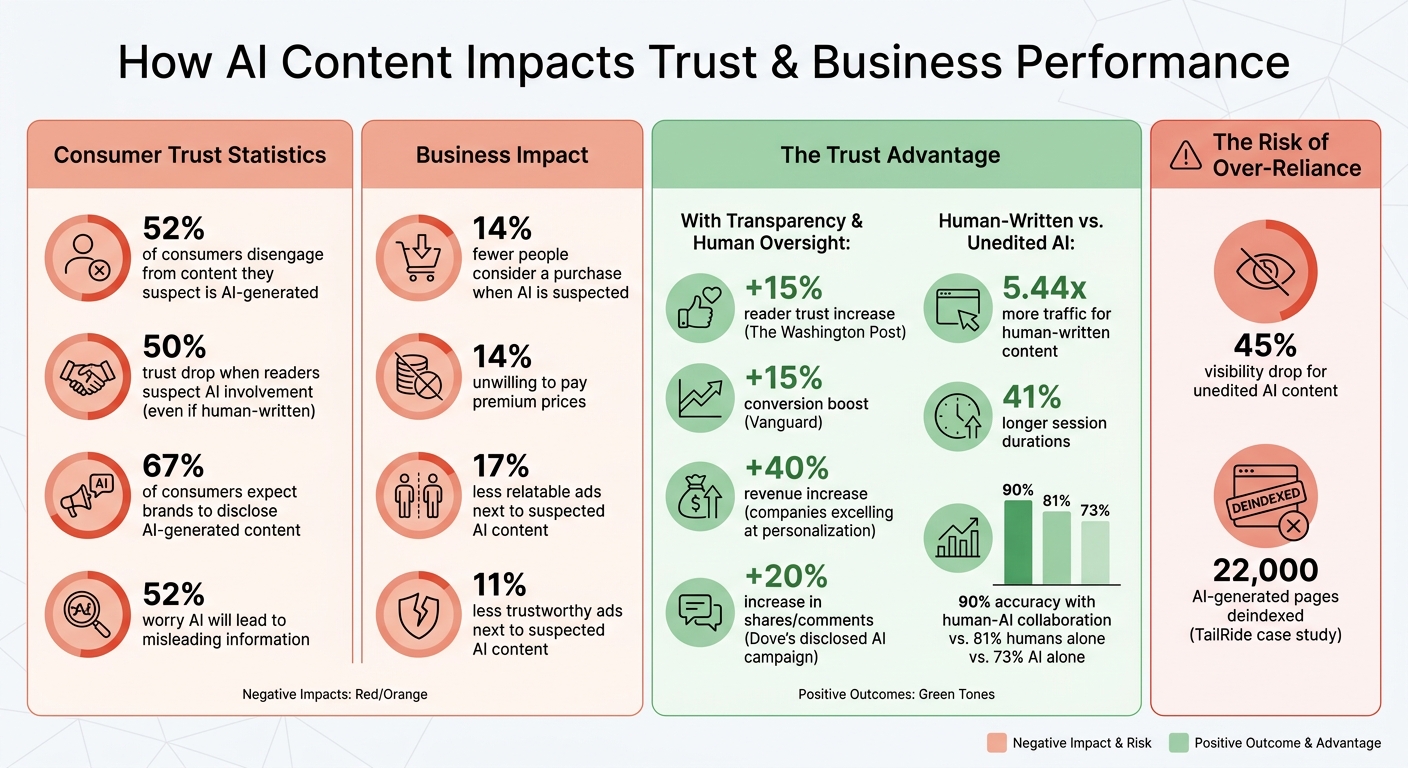
Impact of AI-Generated Content on Consumer Trust and Business Performance
Best Practices for Labeling AI Generated Content to Maintain Trust
sbb-itb-9f5fe42
Why Trust Matters in Online Content
Trust is the backbone of any successful online relationship. In today’s world of generative AI, trust plays a decisive role in whether content resonates with audiences. Chandra Sinnathamby from Adobe highlights this, stating that trust is the key to success in the AI era. But here’s the challenge: when readers suspect content is AI-generated, trust plummets by nearly 50% - even if the content was actually written by a human. This perception issue directly impacts businesses, with 14% fewer people considering a purchase and an equal percentage unwilling to pay premium prices. Even more concerning, over half (52%) of consumers disengage entirely from content they believe is AI-generated. These numbers paint a clear picture of how trust directly influences brand performance.
How Trust Affects Brand Reputation
Trust isn’t just a nice-to-have; it’s the glue that holds your brand’s relationship with its audience together. When people trust your content, they engage more deeply, stay longer, and are more likely to become loyal customers. But when trust falters, the fallout touches every corner of your business.
Take TailRide, for example. The company published 22,000 AI-generated pages, only to have them completely deindexed after Google’s core update in March 2024. The founder’s reflection was brutally honest:
The issue was not AI itself. It was scale plus quality plus trust. The speed made it obvious to Google we were gaming the system.
The damage extends beyond search engine rankings. Ads placed next to suspected AI content are seen as 17% less relatable and 11% less trustworthy. For brands running ads at a $5.00 CPM, a 15% performance drop can quickly translate into significant financial losses. Meanwhile, human-written content consistently outperforms unedited AI material, driving 5.44 times more traffic and leading to 41% longer session durations. These examples highlight just how critical trust is in maintaining brand credibility and performance.
Common Obstacles to Building Trust Online
Building trust in digital spaces is already challenging, and Automated content creation often amplifies these difficulties. For instance, 52% of consumers worry that AI will lead to misleading or inaccurate information. This skepticism sets a high bar for brands aiming to build credibility.
One major trust-breaker is inconsistent messaging. When a brand’s tone or voice shifts noticeably between posts or platforms, audiences start questioning whether there’s a genuine, thoughtful person behind the content who understands their needs.
Transparency - or the lack of it - is another stumbling block. Research shows that 67% of consumers expect brands to disclose when content is AI-generated. When companies withhold this information and audiences find out later, the sense of betrayal can cause far more harm than being upfront would have.
On top of that, readers are quick to spot robotic phrasing, repetitive language, or generic advice that lacks depth or personal insight. These telltale signs of AI involvement trigger distrust, leading readers to abandon content and doubt the brand’s expertise. Dana Davis from RankScience sums it up well:
Suspected AI involvement... is not a quality problem you can fix with better prompts. This is a perception problem that destroys business results.
Recognizing these challenges is the first step to creating content that is transparent, consistent, and capable of earning the trust of your audience. Without trust, even the most sophisticated AI tools can’t bridge the gap between your brand and its potential customers.
How AI Tools Improve Trust in Content Creation
AI tools are reshaping content creation by addressing challenges like inconsistent messaging and transparency. While some people may still approach AI-generated content with skepticism, these tools, when used thoughtfully, can actually strengthen trust. Rather than replacing human creativity, AI enhances consistency, personalization, and clarity, particularly on a large scale.
Keeping Your Messaging Consistent
Consistency in messaging is crucial for building trust. A mismatch between, say, a polished LinkedIn post and a casual Instagram caption can leave audiences questioning your brand's strategy. AI tools help avoid this by learning your tone, audience preferences, and key messaging, ensuring these elements stay consistent across platforms and formats.
Take Draft AI, for example. Its custom style analysis feature evaluates your past content to understand your unique voice. Whether you're drafting a LinkedIn carousel or scripting an Instagram Reel, the tool maintains your brand's tone and style.
This consistency isn't just about looking polished - it drives results. Studies show companies excelling at personalization and consistent branding see a 40% increase in revenue. Additionally, 71% of consumers expect brands to recognize their preferences and deliver a seamless experience. A real-world example? In November 2023, Vanguard, an investment firm, used AI to create personalized ads while adhering to strict industry regulations, leading to a 15% boost in conversion rates.
"Think of AI content creation like flying an airplane - autopilot does a lot of the work, but there's always a human in the cockpit making flight adjustments."
This "human-in-the-loop" approach ensures that while AI handles the heavy lifting, human editors refine the content to align with brand values and personality. Pairing AI's efficiency with human oversight makes it possible to deliver not only consistent but also engaging content.
Creating Content That Connects with Your Audience
Consistency is important, but your content also needs to resonate with your audience. AI tools analyze customer data to craft tailored messages that speak directly to different audience segments, making them feel seen and understood.
For instance, Draft AI's voice-to-content generation feature lets you send raw data or even a voice recording, and within minutes, it produces polished content that matches your style. It can also suggest viral content ideas with compelling hooks.
While AI excels at analyzing data and creating drafts, human input remains critical. Humans bring emotional depth, explore subtleties, and ensure the content feels relatable and meaningful. The result? Content that reflects your insights and personality, amplified by AI's speed and precision.
But creating relatable content isn't the only factor in building trust - being honest about AI's role in the process is just as important.
Being Transparent About AI-Generated Content
Transparency is a cornerstone of trust. As AI SEO Specialist Dipti Padalkar puts it:
"Disclosure is a trust signal, not a ranking requirement. When disclosure helps readers understand how something was created, it builds confidence."
Clear disclosure messages like "AI assisted in drafting this content, and a human editor reviewed it for accuracy" can reassure your audience. This approach makes it clear what parts of the process AI handled - like research or outlining - and what was verified or refined by a person.
Being upfront about AI involvement can also address concerns about credibility. For advice-heavy or high-stakes content, consider adding a short note near the headline or at the end of the piece. Tailoring your disclosure to the type of content - such as using a "Process-Assist" framework for how-to guides or a "Feature-Label" approach for tools and utilities - can further enhance trust without sounding overly formal or defensive.
Draft AI Features That Build Trust

Draft AI takes consistency and transparency to the next level with features designed to strengthen trust in your content. Instead of overshadowing your unique voice, it refines and amplifies it, turning raw ideas into polished, meaningful messages.
Voice-to-Content Generation
AI-generated content often struggles to feel personal or relatable, which can make it fall flat. Draft AI's Voice-to-Content Generation solves this by starting directly with your spoken words. As Kim Klassen says, "Your voice is essential to your creative expression." This method ensures that your message retains its emotional depth and specific details, even as the AI fine-tunes the language. Interestingly, research indicates that people find AI-generated content less natural and less useful - even when it's identical to human-created material. By prioritizing your voice, Draft AI bridges this gap, preserving the authenticity and connection that resonate with your audience.
This seamless personalization ties into its ability to maintain a consistent tone through custom analysis tools.
Custom Style Analysis
Draft AI's custom style analysis takes a deep dive into your previous content - whether it's social media posts, scripts, or other formats - to capture your unique tone and style. This ensures that every new piece aligns with your established voice. Personalization pays off, with companies excelling in this area seeing 40% more revenue, while 71% of consumers expect brands to deliver tailored, cohesive experiences. For those looking for even more control, the Draft Pro plan offers unlimited style customization and the flexibility to update your writing guidelines as your brand evolves. This level of reliability and consistency builds trust by creating messaging that feels familiar and dependable.
But ensuring style consistency is just one piece of the puzzle. Draft AI also helps you connect with global audiences through its multilingual capabilities.
Multilingual Translation and Accessibility
Reaching a global audience requires speaking their language - literally. Draft AI's multilingual translation tools and features allows you to communicate effectively with diverse markets while keeping your message intact. Personalized content in a user's native language fosters engagement and strengthens how your brand is perceived. By combining AI-powered translation with human oversight to address cultural subtleties, Draft AI ensures your content resonates globally. This approach not only expands your reach but also maintains the consistency that builds trust with audiences worldwide.
Best Practices for Using AI to Build Trust
AI tools can speed up content creation, but trust doesn't happen by accident. It requires deliberate choices about how you use these tools and how open you are with your audience. The following tips build on earlier discussions about consistency, personalization, and transparency, helping ensure AI-assisted content earns and keeps trust.
Be Clear About AI Usage
Transparency about AI's role isn't just the right thing to do - it signals trust. When readers expect human expertise, they deserve to know if AI was involved. Clear disclosure can actually build confidence.
For example, include a note near the headline or at the end of the article explaining AI's role. Use straightforward language, like: "AI tools were used for drafting and structuring this content, but all information was reviewed and edited by a human for accuracy and clarity."
Combine AI with Human Review
Transparency sets the stage, but human review ensures the content is credible. Adding a human editor's name to the content reinforces accountability. Use best content creation tools for tasks like drafting, synthesizing research, or creating outlines, but leave refinement, emotional depth, and unique perspectives to human editors.
Double-check AI-generated stats, citations, and facts with primary sources to avoid errors, often called "hallucinations". Human reviewers should also verify cultural sensitivities, check for biases, and ensure originality before publication.
Collaborative efforts between humans and AI have shown impressive results, achieving 90% accuracy in content tasks - outperforming the 81% accuracy of humans alone and 73% of AI alone. A great example is Dove’s use of AI to analyze sentiment data for inclusive messaging in early 2025. By openly sharing AI's role, the campaign saw a 20% increase in shares and comments compared to non-disclosed campaigns.
Prioritize Quality Over Quantity
Consistency builds trust, but quality solidifies your reputation. Limit AI's role to around 30%-50% of the creative process to ensure the content retains a strong human element. Let AI handle tasks like data analysis or checking for consistency, while humans focus on strategic direction, tone, and ethical considerations.
"The goal isn't to prove you used AI responsibly. It's to make readers feel confident that someone responsible is still in charge."
A cautionary tale comes from TailRide, whose over-reliance on mass AI-generated content led to a total loss of organic traffic following a core update. The founder later admitted:
"The issue was not AI itself. It was scale plus quality plus trust. The speed made it obvious to Google we were gaming the system."
Instead of flooding your calendar with content, aim to create meaningful pieces that genuinely serve your audience. Quality always trumps quantity when it comes to building trust.
Conclusion
When thoughtfully integrated, AI tools can enhance trust in online content by maintaining transparency about their role, ensuring human oversight, and focusing on quality over sheer speed.
Studies highlight the power of human-AI collaboration, achieving an impressive 90% accuracy compared to 81% for humans alone and 73% for AI on its own. For instance, clear attribution practices helped The Washington Post increase reader retention by 15%. On the flip side, unedited AI-generated content has been linked to visibility drops as steep as 45%.
These findings emphasize that the best results come from using AI as a supportive tool. AI excels at tasks like drafting, analyzing data, and maintaining consistency, while humans bring strategic direction, emotional nuance, and rigorous fact-checking. As Dipti Padalkar aptly puts it:
"The goal isn't to prove you used AI responsibly. It's to make readers feel confident that someone responsible is still in charge."
To explore this balance, tools like Draft AI offer features such as voice-to-content generation and custom style analysis, helping creators maintain both speed and consistency without losing the human touch.
Ultimately, trust stems from delivering value, not just churning out volume. By using AI wisely, being upfront about its role, and ensuring human oversight, you can transform AI from a potential risk into a powerful edge for your content strategy.
FAQs
How should I disclose AI use without hurting trust?
Being upfront about using AI in your content creation is key to maintaining trust. When you're transparent about AI's role, it shows integrity and aligns with what most audiences value - honesty. In fact, research indicates that people tend to trust brands more when they openly and ethically disclose their use of AI. By clearly communicating this, you not only keep your audience informed but also strengthen relationships and build loyalty over time.
What needs human review in AI-written content?
AI-generated content often needs a human touch to ensure it meets standards of accuracy, clarity, and credibility. This involves tasks like fact-checking to catch any mistakes or outdated details, fine-tuning the tone to align with a brand's personality, and making sure the message resonates emotionally with the audience. Human input also plays a critical role in spotting repetitive AI language, enhancing engagement, and addressing ethical concerns - like being transparent about when AI has been used to create content.
How can I avoid AI content hurting my SEO?
To keep AI content from negatively affecting your SEO, concentrate on quality, honesty, and originality. Always refine AI-generated content with human insights to add more depth and create a sense of reliability. Steer clear of content that's overly generic or repetitive, and instead, focus on showcasing expertise and building authority in your niche. While you're not obligated to disclose the use of AI, being upfront about it can enhance your credibility. By sticking to these principles, you can strengthen trust with your audience and improve your SEO performance.